Scuba diving in Roatan changed everything for me. I’d always been curious about diving, but never took the plunge until we found ourselves on this tiny Caribbean island.
Something about the turquoise water, the laid-back island vibe, and the promise of incredible underwater life convinced me it was finally time to get certified. It was one of the best decisions I’ve ever made and Roatan turned out to be the perfect place to start my diving journey.
The snorkelling here is also amazing so if you are travelling with non-divers, they’ll have plenty of amazing water experiences as well. Only I was getting certified, but Chaz had a fantastic time snorkelling, enjoying the calm waters, and chilling on the sugary sand with a cold bevvy.
Whether you’re thinking about getting your first certification, already dive-certified and looking for your next underwater adventure, or just curious about what makes Roatan such a special diving destination, I’m going to share everything I learned from my experiences getting both my Open Water and Advanced Open Water certifications here. From costs and dive sites to what to expect as a complete beginner, let’s dive right in to scuba diving in Roatan!
Out Roaming Life contains affiliate links and is a member of the Amazon Services LLC Affiliate Program.
If you make a purchase using one of our links, we may receive compensation at no extra cost to you.
We only recommend products and services we trust. Read our disclaimer for more information.
Where is Roatan?
Before we talk about the diving, let’s get oriented.
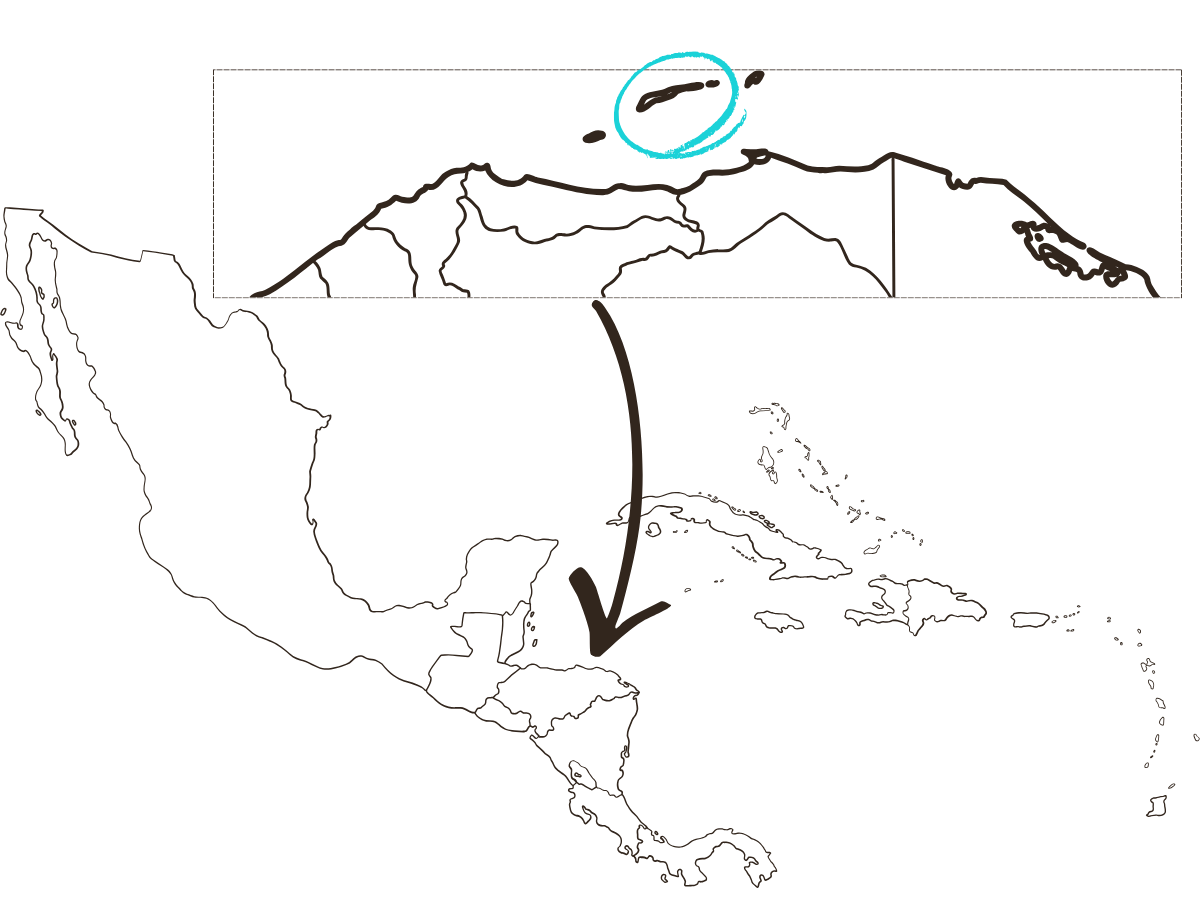
Roatan is part of the Bay Islands of Honduras, which is about 64km (40 miles) off the northern coast of mainland Honduras in the Caribbean. It’s the largest of the Bay Islands —which also include Utila and Guanaja—at about 60km long (37 miles) and a max of about 8km (5 miles) wide.
The island is surrounded by the Mesoamerican Barrier Reef. This is the second-largest barrier reef system in the world after Australia’s Great Barrier Reef.
This geography is exactly what makes Roatan special for diving. The reef sits incredibly close to shore in many spots. You can access world-class dive sites with just a short boat ride or from the beach for shore dives. The reef drops off dramatically in places, creating walls that plunge into the deep blue. And the variety of marine life is honestly stunning.
Getting to Roatan is easier than you might think. Flights to Roatan Honduras arrive at Juan Manuel Gálvez International Airport (RTB). There are direct connections from several US cities including Houston, Atlanta, Miami, and Dallas.
We flew from Canada through Houston, and the flight was just under three hours. You can also connect through San Pedro Sula on the Honduran mainland if you’re coming from other locations.
Is Roatan Safe?
This question comes up a lot and it’s totally valid when Honduras often appears in travel advisories. Here’s out honest take: Roatan feels very different from the warnings about mainland Honduras.
The island has a strong tourism infrastructure and generally feels safe. This is especially true in the main tourist areas like West End and West Bay where most of the dive shops and resorts are located.
During both of our trips to the island, we never felt unsafe. We walked around West End at night, took local taxis, and explored different parts of the island without any issues.
That said, you should always use common sense like you would anywhere. Don’t flash expensive jewellery or equipment, keep an eye on your belongings, and stick to well-travelled areas, especially after dark.
The dive community on Roatan is tight-knit and welcoming. Everyone from dive instructors to resort staff seemed genuinely invested in making sure visitors had a great experience. That culture of hospitality definitely added to my sense of security throughout our stays.
Does Roatan Have Good Scuba Diving?
Scuba diving in Roatan is amazing! It’s one of the best scuba diving destinations in the Caribbean and even the best scuba diving in the world. The combination of healthy reefs, diverse marine life, excellent visibility (often ~24-30 m / 80-100 ft), warm water year-round, and accessibility makes it a diver’s dream.
The underwater landscape varies dramatically depending on where you dive. You’ll find everything from shallow coral gardens that are perfect for beginners to dramatic wall dives that drop into the abyss. There are also swim-throughs and tunnels, sandy bottoms with garden eels poking out, and reef systems teeming with colourful fish.
I saw Caribbean reef sharks, eagle rays, sea turtles (so many sea turtles!), moray eels, octopuses, spotted drums, parrotfish, barracuda, and more tiny macro creatures than I could possibly identify.

Roatan Honduras Scuba Diving Resorts: Open Water Experience
I chose Los Rocas Resort & Dive Centre for my Open Water certification, and I’m so glad I did. Located in West End, Los Rocas is a small, locally owned operation. It captures the relaxed island vibe while being extremely professional about safety and training.
The staff at Los Rocas were incredibly friendly and knowledgeable. My instructor was patient with beginners and ensured we understood important safety concepts. The equipment was well-maintained (always a good sign at a dive shop), and I felt confident using everything they provided.
What really stood out was how reasonably priced everything was compared to other diving destinations I’d researched. The class size was perfect, too. Most dives had around six people, which meant our instructor could give everyone individual attention without feeling rushed.

Best Scuba Diving Spots in Roatan for Beginners
During my Open Water certification, I got to experience four different dive sites that showcased the variety of scuba diving in Roatan:
➤ Mandy’s Eel Garden
Mandy’s Eel Garden became one of my favourite spots right away. This site features a sandy bottom at around 15-18 m (50-60 ft) where hundreds of garden eels live.
The eels stick their bodies out of the sand to feed on plankton drifting by. When you get close, they duck back into their burrows. Watching them sway in the current was mesmerizing.
➤ Seaquest Shallow
Seaquest Shallow was perfect for building confidence as a beginner. The top of the reef sits at about 9-12 m (30-40 ft), with lots of healthy hard and soft corals.
I saw my first sea turtle here! It was just casually munching on some sponge while completely ignoring the group of excited new divers hovering nearby. The relatively shallow depth meant we could stay down longer and really focus on perfecting our skills.

➤ West End Wall
West End Wall gave me my first taste of wall diving, and wow, what an introduction. The reef slopes down gradually before dropping off into a dramatic vertical wall that disappears into the blue.
Swimming along the edge of that wall, with shallow reef on one side and seemingly infinite blue on the other, was both thrilling and slightly terrifying in the best way. We spotted eagle rays cruising in the blue, and the wall itself was covered in colourful sponges and corals.
➤ Turtle Crossing
Turtle Crossing lived up to its name. This site is known for frequent turtle sightings, and we weren’t disappointed. Multiple green sea turtles were feeding on the reef, and we spent a good portion of the dive just watching them. The site has a nice mix of coral formations, sand patches, and rock structures that create interesting swim-throughs perfect for new divers to explore.

Advanced Open Water with Paradise Divers
By my second trip to Roatan, I was hooked on diving and ready to expand my skills. I chose Paradise Divers for my Advanced Open Water certification, and it turned out to be an incredible experience. Located in West End, Paradise Divers has a stellar reputation and lived up to every positive review I’d read.
What made this certification extra special was that I was the only person doing the course during that period, so I ended up with completely private, one-on-one instruction. My instructor tailored everything to my pace and interests, and I got way more personalized feedback than I would have in a larger group.
The Advanced Open Water course requires five specialty dives, including a deep dive and an underwater navigation dive, plus three other specialties of your choice. My instructor helped me pick dives that would expose me to different conditions and techniques while taking advantage of some of Roatan’s best dive sites.
Top 5 Advanced Open Water Dive Sites
These five dives showed me just how varied the diving around Roatan could be:
➤ The Bite (Drift Dive)
The Bite was my first experience with drift diving, where you let the current carry you along the reef. It’s an exhilarating way to dive, almost like flying underwater. The Bite features a beautiful reef with lots of swim-throughs and channels, and the current brings in plenty of fish and sometimes larger pelagics. On this dive, we were lucky enough to drift alongside a beautiful turtle.

➤ Seaquest Deep (Deep Dive)
Seaquest Deep took me down to around 30 m (100 ft), my deepest dive to that point. The goal was to experience the effects of nitrogen narcosis in a controlled environment and practise safety procedures for deep diving. The site itself had some impressive coral formations and several large groupers hanging out in the deeper sections.

➤ Mandy’s Eel Garden (Night Dive)
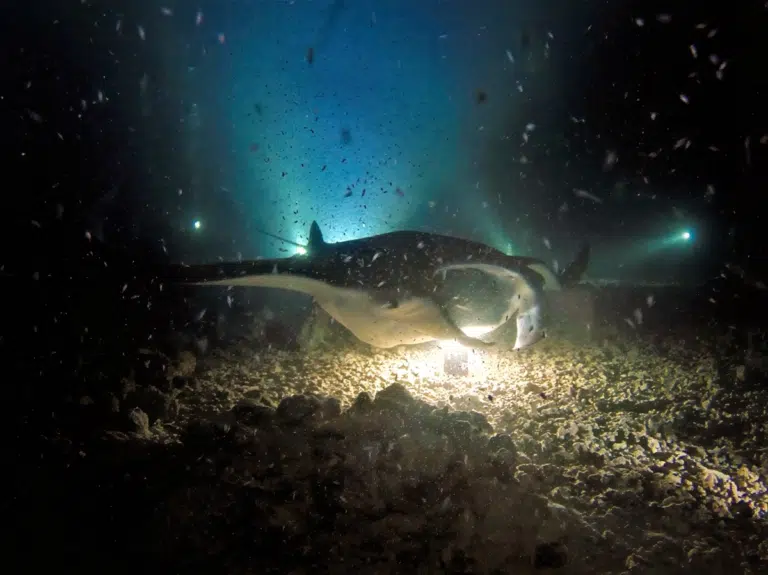
Mandy’s Eel Garden was the same site I’d visited during my Open Water certification, but experiencing it at night was completely different. The reef comes alive at night with creatures you never see during the day. We spotted octopuses hunting, lobsters out and about, basket stars unfurling their intricate arms, and all sorts of crabs and shrimp that hide during daylight. If you’re interested in other incredible night diving experiences, the Kona manta ray night dive in Hawaii is absolutely bucket-list worthy.
➤ Butcher’s Bank (Buoyancy Dive)
Butcher’s Bank focused on perfecting neutral buoyancy, which is one of the most important skills for a diver. We did exercises like hovering motionless at different depths, navigating through a simple underwater obstacle course, and practising the “helicopter turn.” I came away from this dive feeling so much more confident in my buoyancy control.

➤ Temptation Reef (Navigation Dive)
Temptation Reef taught me how to navigate underwater using a compass and natural navigation techniques. We practised swimming to specific compass headings, making square patterns, and finding our way back to our starting point. This might sound boring, but it’s super empowering to be able to find your way around underwater confidently.
How Much Does it Cost to Scuba Dive in Roatan, Honduras?
Let’s talk numbers because this is probably one of your biggest questions. How much does it cost to scuba dive in Roatan, Honduras? The short answer: less than most comparable Caribbean destinations, but the value is exceptional.
Here’s a breakdown based on my experiences and current prices from various dive shops:
- Open Water Certification: $350-500 USD. This typically includes all classroom materials, pool/confined water sessions, four open water dives, equipment rental, and certification processing fees.
- Advanced Open Water: $300-450 USD.
- Individual Fun Dives: Around $60 USD per dive, or you can get package deals like 10 dives for $500-550 USD.
- Dive Equipment Rental: Usually $10-15 USD per day for a full gear setup if you’re already certified and just need equipment.
When you compare these prices to other popular diving destinations, Roatan offers serious value. And the quality of instruction and diving was just as good (if not better) than more expensive destinations. These reasons make Roatan an excellent choice for budget-conscious divers or anyone looking to get certified without breaking the bank.
What Side of Roatan Has the Best Diving?
The south side of Roatan (where West End and West Bay are located) tends to be calmer and more protected, especially during winter months when the north side can get rougher. Most of the dive shops and resorts are concentrated on the south and west coasts, and there are plenty of incredible dive sites in these areas.
That said, the north side has some spectacular diving, too, particularly around places like Gibson Bight and Eastern Roatan. These sites tend to be less crowded and offer pristine reefs and walls. The trade-off is that they’re less accessible and weather-dependent.
For beginners, the west and south sides are generally better because of calmer conditions and easier access. As you gain experience and confidence, exploring the north shore sites becomes more feasible and rewarding.
The reality is that Roatan is surrounded by the reef, so you can find excellent diving all around the island. The “best” diving depends more on current conditions, your skill level, and possibly which side of the island you’re on.
Other Top-Rated Dive Shops in Roatan
While I dove with Los Rocas and Paradise Divers, Roatan has numerous excellent dive operations worth considering. There are many great dive shops all over Roatan.
The diving community is professional, safety-conscious, and genuinely passionate about sharing the underwater world with visitors. Read recent reviews, consider your location on the island, and choose a shop that feels like a good fit.
When Is the Best Month to Scuba Dive in Roatan?
Here’s some good news: you can dive in Roatan year-round! The water temperature stays a comfortable 25-29 °C (77-84 °F) throughout the year and visibility is generally excellent no matter when you visit.
That said, there are some seasonal considerations:
➤ Dry Season (March-September)
This is considered the best time for scuba diving in Roatan. You’ll have the calmest seas, best visibility (often 30+ m / 100+ ft), and most consistent weather. July and August can be hot and humid, but the diving conditions are typically perfect. This is peak tourist season, so expect more people at popular dive sites and higher prices for accommodation.
➤ Rainy Season (October-February)
Don’t let the name scare you off. “Rainy season” in Roatan doesn’t mean constant downpours like you might experience in other tropical destinations. Rain usually comes in short, intense bursts, often at night or in the late afternoon.
For scuba diving in Roatan, conditions remain good throughout this period, though you might encounter slightly reduced visibility after heavy rains (usually still 18-24 m / 60-80 ft). November and December can be wetter and rougher due to occasional northerly fronts, but January through February often have beautiful weather with fewer crowds.
What to Pack: Essential Gear for Scuba Diving in Roatan
Most dive shops provide all the necessary scuba diving equipment as part of certification courses or for a nominal rental fee with fun dives. That said, having your own personal gear can make diving more comfortable and enjoyable.
- Mask and Snorkel: A properly fitting mask makes a huge difference. Having your own snorkel is also important for surface time and snorkelling adventures.
- Scuba Diving Fins: Having your own pair that fit perfectly is wonderful. I struggled with poorly fitting rental fins during my Open Water course and ended up with blisters.
- Wetsuit or Dive Skin: Even though the water is warm, I wore a full 2/3 mm wetsuit of my own. Lots of people wear shorty-style or just a bathing suit with rash guard. I prefer to be protected from stinging things.
- Dive Computer: Most dive shops provide computers, but if you plan to dive regularly, investing in your own is worth it.
- Reef-Safe Sunscreen: This is crucial! Bring reef-safe, mineral-based sunscreen to protect your skin without harming the coral reefs.
- Underwater Camera and Dive Housing: You’ll want to capture the incredible marine life you’ll see. Whether it’s a GoPro or a dedicated underwater camera (such as the Olympus TG-6/7) you’ll be glad you brought something.
- Logbook: Physical or digital, keeping a detailed dive log is both useful and fun.
The dive shops provide everything else: BCD (buoyancy control device), regulator, tanks, weights, and wetsuits if needed.
Where to Stay: Roatan Honduras Resorts and Accommodations
Accommodation options on Roatan range from backpacker hostels to luxury resorts, with everything in between. Here’s our pick for Roatan resorts with dive centres.
West Bay is where we stayed both times, and we loved the vibe there. The beach is stunning, there is great snorkelling (especially at the far left side when looking out at the water), and lots of great spots to eat. It is the more touristy beach, compared to West End, but it’s an optimal spot.
West End is more local and backpacker-friendly with easy access to dive shops, restaurants, and bars. The atmosphere is social and laid-back. It’s also a great area to stay, but busier along the shore with a road running alongside. West Bay, in comparison, only has access points to the beach so avoids vehicle traffic taking away from the ambience.
Sandy Bay is a more local area north of West End with great reef access and dive resorts like Anthony’s Key Resort. This is also the location of the Roatan Institute for Marine Sciences (RIMS).
The central area of Roatan includes neighborhoods like French Harbour, Pristine Bay, and First Bight, spanning both the southern shore (iron-shore) and the reef-lined northern coast. This region provides easy access to excellent dive sites along the Mesoamerican Barrier Reef, local amenities, marinas, and a mix of authentic island communities, making it ideal for travellers who want to explore different parts of the island while staying centrally located.
East End is much quieter and less developed. If you want to get away from other tourists, the East End offers beautiful, secluded accommodations.
For budget travellers, expect to pay around $50 USD per night, per person for basic accommodations or hostels. Mid-range hotels and guesthouses run $75-150 USD based on double occupancy, while higher-end resorts start around $200 USD based on double occupancy and go up from there.
Practical Tips for Planning Your Roatan Diving Trip
Here are some practical things I learned that might help you plan:
- Book your certification in advance, but stay flexible with fun dives. Dive shops sometimes fill up, especially during peak season.
- Bring both cash and cards. Most dive shops accept credit cards, but some smaller operations or restaurants are cash-only. The local currency is Honduran Lempiras, but U.S. dollars are widely accepted.
- Budget extra for the marine park fee (around $10 USD for a single day or $20 for a week) and tips.
- Consider travel insurance that covers diving. Most don’t cover diving emergencies, such as low-flight repatriation or hyperbaric chambers. DAN (Divers Alert Network) offers excellent dive insurance that most divers rely on.
- Give yourself time to adjust. If possible, arrive a day before you start your certification. Try not to schedule a flight on the same day as your last dive. It’s recommended to wait 18-24 hours after your last dive before flying to minimise decompression sickness risk.
- Check if your dive shop offers equipment storage. Many shops will rinse and store your gear between dive days if you’re doing multiple days in a row.
Things to Do in Roatan (for Non-Divers)
If you’re travelling with non-divers or just want some surface interval activities, Roatan offers plenty to do.
Snorkelling of course! Roatan offers world-class snorkelling along the Mesoamerican Barrier Reef, with West Bay Beach being our top recommendation (head to the left end of the beach when facing the water for the best coral and marine life just a short swim from shore).
Other exceptional spots include Blue Channel in Sandy Bay for vibrant coral canyons and eagle rays, Half Moon Bay in West End for a laid-back local vibe, Little French Key for pristine protected reefs, and Camp Bay on the south coast for secluded, crowd-free snorkelling.
Snorkelling tours are a great way to experience locations off-shore!

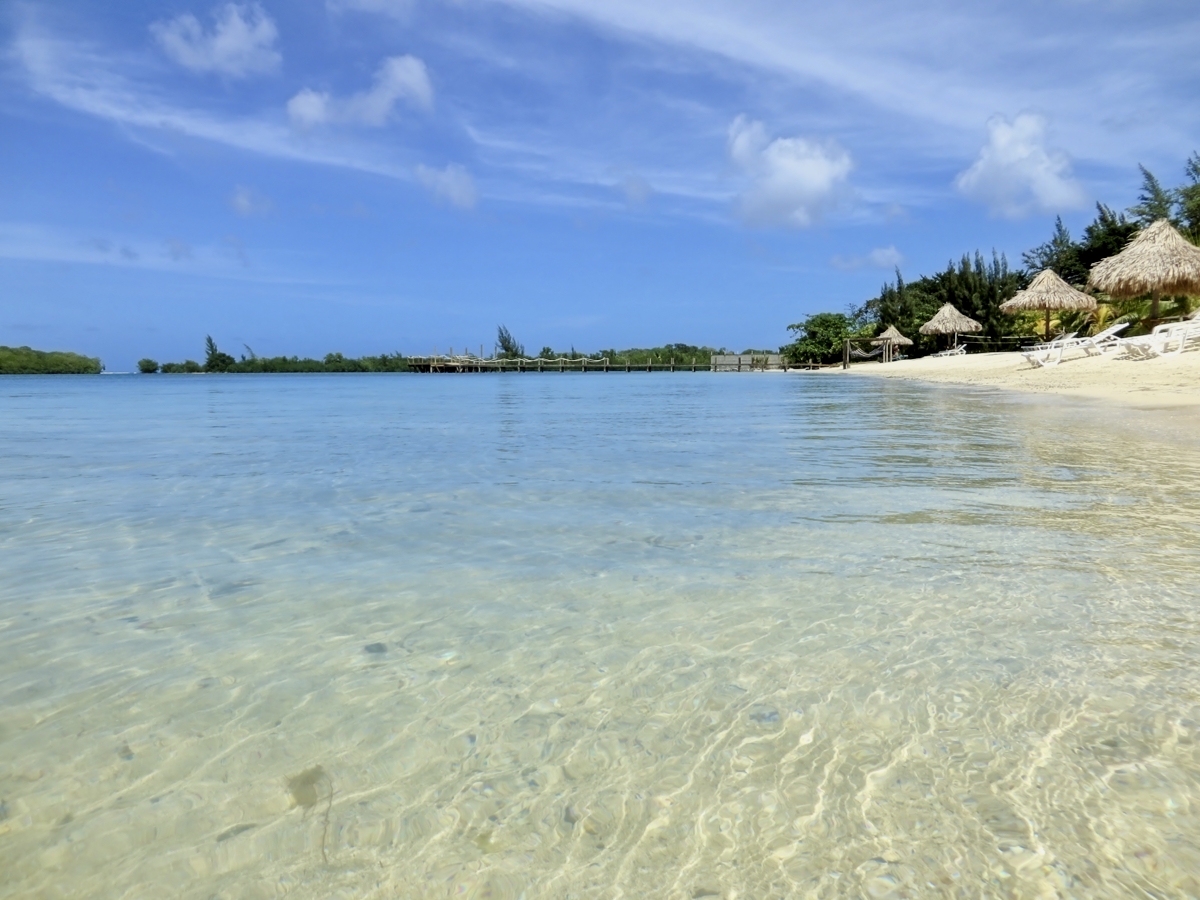
West Bay Beach is stunning and perfect for relaxing between dives. The white sand beach stretches for about a mile with crystal-clear turquoise water. As mentioned, snorkelling right off the beach is excellent. A few of our favourite spots to eat are Trattoria Da Piero (at Las Rocas Resort), Foster’s, and Cayuco Beach Bar (Paradise Beach Hotel).
West End Village has a charming, laid-back atmosphere with restaurants, shops, and bars lining the waterfront. Half Moon Bay beach in West End is smaller and more intimate than West Bay, but equally beautiful.
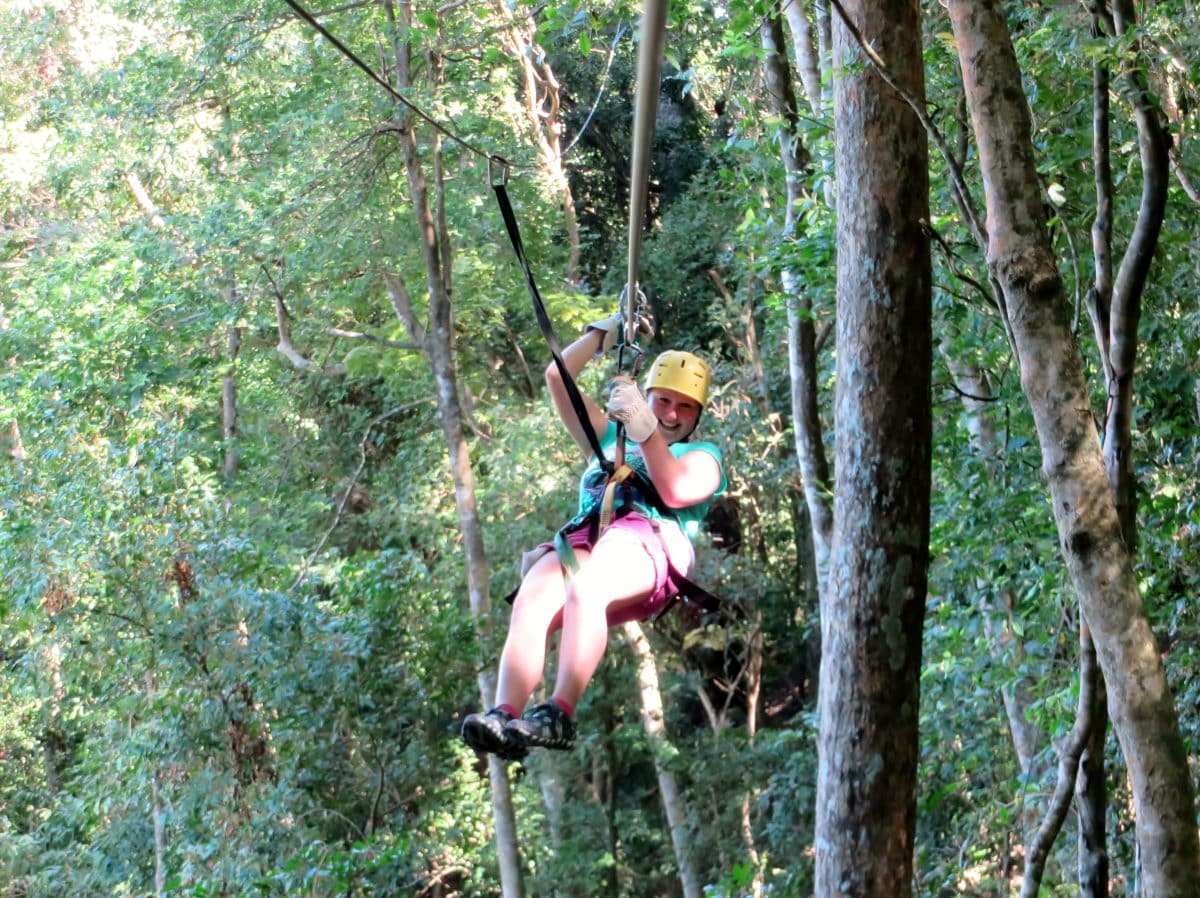
Gumbalimba Park offers a different kind of wildlife experience with botanical gardens, white-faced monkeys, scarlet and green macaws, and other tropical animals. Gumbalimba Park also offers zip-lining with 13 lines. We did both the zip-lining and park together, and would recommend it!

Zip-lining is available at several locations around the island. South Shore Canopy Zipline was also excellent and a tonne of fun!
Chocolate Making Class at the Roatan Chocolate Factory near West End let you learn about cacao production and sample delicious chocolate.
Final Verdict: Scuba Diving in Roatan Changed My Life!
Learning scuba diving in Roatan changed my life. It literally opened an entirely new world. Suddenly, 70% of the planet that was previously inaccessible became somewhere I could explore.
The warm Caribbean water made those first uncertain moments underwater less intimidating. The patient, skilled instructors at Los Rocas and Paradise Divers gave me confidence in my abilities. The spectacular marine life made every single dive feel like a reward.
Now, I’ve logged dives in other countries like Curaçao and Hawaii (to name a couple). Roatan’s prices are about the most budget-friendly and waters are pretty hard to beat.
If you’re considering taking the plunge (pun absolutely intended) and learning to scuba dive, I can’t recommend Roatan highly enough. Whether you’re drawn by the affordable prices, the incredible biodiversity, the laid-back island atmosphere, or the professional dive operations, you won’t be disappointed.
The underwater world is waiting for you and Roatan is one of the best places on Earth to take that first breath below the surface.

If you enjoyed this guide, please save, pin it on Pinterest, and share it with anyone else who might be dreaming of learning to dive in paradise!
Scuba diving is not just a hobby; it’s a way of life that connects us to our true selves and the world around us.
Unknown