
Welcome to our Ireland travel guide! When you start planning a trip to Ireland, the questions pile up fast. Do you need a visa? What’s the best time to visit? How do you get around? Where should you stay? What are the can’t-miss experiences?
Here’s what we discovered: Ireland completely exceeded our expectations. The streets of Dublin buzz with life and stories around every corner. The Cliffs of Moher left us absolutely speechless. Ancient castles in Meath made us feel like we’d stepped back 800 years. And the pubs in Galway? Let’s just say we stayed way longer than we’d planned because the music and atmosphere were too good to leave.
The best part? You can pack all of this into one epic day or stretch it out over two weeks of slow travel. There’s genuinely no wrong way to experience Ireland.
This Ireland travel guide covers a bunch of topics to guide you on your way, including how to build your Ireland travel itinerary, what things actually cost, the best ways to get around, and our top recommendations for must-see spots. Whether you’re planning on a tight budget or ready to splurge, we’ve got you covered.
Out Roaming Life contains affiliate links and is a member of the Amazon Services LLC Affiliate Program.
If you make a purchase using one of our links, we may receive compensation at no extra cost to you.
We only recommend products and services we trust. Read our disclaimer for more information.

Do You Need a Passport to Go to Ireland?
Yes, you’ll need a valid passport when travelling to Ireland. Your passport should be valid for the duration of your stay. Ireland is part of the European Union, but since it’s not in the Schengen Area, it has its own immigration arrangements.
US, Canadian, UK, Australian, and EU passport holders don’t need a visa for stays up to 90 days for tourism purposes. If you are from elsewhere, be sure to check visiting requirements.
When you arrive at Dublin Airport or any Irish port of entry, immigration officials will stamp your passport. Keep this safe as you’ll need to show it when you depart.
Pro Tip
Make copies of your passport (both physical and digital) and store them separately from the original. This is always part of our standard travel routine. It’s also good practice to always double check entry requirements even if you have visited a country in the past as rules can occasionally change.
When is the Best Time to Go to Ireland?
The best time to travel to Ireland really depends on what kind of experience you’re after. This is one of the most common questions in any Ireland travel guide because timing will have an impact on your experience. Here’s what you need to know about the best months to travel to Ireland.
Summer Season (June to August)
If you want the warmest weather and longest days, summer is it. Weather wise, these are among the best months to travel to Ireland if you want to maximize daylight for sightseeing. The days stretch until nearly 10 PM in June and July, giving you plenty of time to explore Ireland.
Temperatures average around 15-20°C (60-70°F), which is perfect for outdoor activities, hiking, and exploring coastal areas. That said, there will also have days into the mid-20s (mid-70s).
The trade-off? This is peak tourist season. Popular Dublin attractions, the Cliffs of Moher, and other major sites get crowded. Accommodation prices are at their highest, especially in Dublin and along the Wild Atlantic Way. You’ll need to book well in advance and expect to pay premium rates.
Spring Season (March to May)
Spring is one of the best times to visit Ireland if you want pleasant weather without the summer crowds. The countryside is adorn with all the beautiful shades of green (earning that Emerald Isle nickname), wildflowers bloom along country roads, and baby lambs roam the fields.
March brings St. Patrick’s Day celebrations, making it an exciting time to travel Ireland, though Dublin gets exceptionally busy around March 17th. April and May have milder weather, longer days, and fewer tourists than summer months.
During our late April to early May visit, the landscapes were green and lush, and prices were better than summer. No sites we visited felt crowded either. We had great weather with minimal rain (although we did hear that was a bit unusual).
We think this is genuinely one of the best times to travel to Ireland for great value and experience… Especially if you prefer to avoid the crowds like we do!
Fall Season (September to November)
September is gorgeous and still counts among the best months to travel to Ireland. The summer crowds thin out, prices drop, and the weather often remains pleasant. The autumn colours transform the countryside into phenomenal hues of gold and amber.
October brings more rain and shorter days, but also the urge for cozy pub nights, traditional music sessions, and a more authentic local experience. By November, you’re definitely in the off-season, with the shortest days and wettest weather, but also the lowest prices and emptiest attractions.
Winter Season (December to February)
Winter travel to Ireland requires embracing the rain and short days. That said, Christmas markets light up Dublin starting late November, cozy pubs are at their warmest and most welcoming, and you’ll have major attractions nearly to yourself.
Accommodation and flights also hit their lowest prices. You’ll want to pack good rain gear and expect day to end around 4:30 PM in December and January.
Best Places to Travel in Ireland for First-Timers
Where should you go for your first Ireland travel experience? The country is fairly small, but packed with options to check out.
When building your Ireland travel itinerary, consider including these incredible places we’ve explored and fallen in love with. These are some of the best places to travel in Ireland!
Dublin
Dublin is where most Ireland travel journeys begin. This capital city is full of historic charm and exciting energy.

Top Dublin attractions include Trinity College and the Book of Kells, Dublin Castle, Temple Bar’s awesome pubs, St. Patrick’s Cathedral, Christ Church Cathedral, Brazen Head Pub (Ireland’s oldest pub and thought to be the 5th oldest pub in the world), and the Guinness Storehouse.

For history and culture buffs, the EPIC Irish Emigration Museum showcases what it means to be Irish, while Kilmainham Gaol (jail) offers insights into Irish history.
Consider getting a Dublin attractions pass if you plan to visit multiple sites. The Dublin Pass offers entry to over 30 attractions and can save you money if you’re planning a packed 2-day Dublin itinerary.
We felt the best way to get around Dublin was on foot, but the city also has an excellent public bus system. If you want to bus it, get the hop-on, hop-off, double decker bus passes. These passes are good for a set amount of time (e.g., 1-3 days) and are also a great way to see different spots around the city.
There are also numerous Dublin guided tours available to explore the capital with knowledgeable guides. And if you’re exploring Dublin with kids, why not expand their minds at the World of Illusions, Dublin Zoo, or National Leprechaun Museum?
Pro Tip
Book your Guinness Storehouse tickets online in advance, especially during summer. The lines can be brutal, and advance tickets let you skip most of the wait. The sunset time slot offers the best views from the Gravity Bar.

Dublin’s location also makes it perfect for exploring some of Ireland’s most iconic sites. There are many excellent day trips from Dublin Ireland that are easily accessible for those with limited time.
Newgrange World Heritage Site
One of our personal favourites is the Newgrange Ireland monument! We think this is one of the best day trips from Dublin and a true must-see for those that are curious about ancient history. This site is located about 45 minutes to an hour north of Dublin in County Meath.

This 5,000-year-old passage tomb predates the Egyptian pyramids and Stonehenge. The winter solstice alignment is said to be spectacular. It’s a time when the sunlight directly illuminates the inner chamber.
Daily visitor numbers are strictly limited, so booking your tour well in advance is essential, especially during peak season. We learned this the hard way during our off-season visit when we arrived close to last entry and were turned away for the day as they were at maximum visitors for that day. We had to return the next morning to secure our spot.
If you are driving yourself or public transportation, you can purchase individual tickets at the site. Alternatively, you may want to opt for a guided tour from Dublin to take in Newgrange and Battle of the Boyne Visitor Centre.

An interesting note about the large horizontal stone above is that those swirls have been found at sites around the world. We’ve personally seen them in Peru and South Africa, dating back thousands of years!
Trim Castle
Trim Castle Meath is also about 45 min to an hour of Dublin to the northwest. This impressive Anglo-Norman castle is Ireland’s largest. It was even in the film Braveheart!

The castle grounds are free to explore, though guided tours of the interior require tickets. Tickets are nominal with adults being €5.00 (about $6 USD) and we thought it was worth it.

The town of Trim itself is quite quaint and worth wandering. We visited on a Sunday and had a fantastic Sunday Roast at the Castle Arch Hotel.
Galway
Galway Ireland is the cultural heart of the west coast and an absolute must-visit. This quaint city maintains an authentic Irish character that larger Dublin sometimes lacks. There’s plenty of traditional music, colourful shop fronts, and really friendly locals.

The best way to experience Galway is to wander through the Latin Quarter, pop into pubs for traditional music sessions, and soak up the Irish / bohemian atmosphere. Shop Street and Quay Street are the main streets. There are ample buskers, pubs, restaurants, and shops to be found here!

Galway, Ireland is really the perfect base for exploring the Wild Atlantic Way, the Cliffs of Moher, the Burren’s lunar landscapes, and Connemara’s rugged beauty. The city itself deserves at least two nights to fully appreciate what it has to offer.
Cliffs of Moher
The journey from Dublin to Cliffs of Moher makes for a long, but worthwhile day trip from Dublin. These dramatic 700-foot cliffs are Ireland’s most visited natural attraction. You can join organized tours or drive yourself (about 3.5 hours each way). We recommend staying overnight in Galway if possible (90 minutes away), but it’s doable as a day trip from Dublin if you start early.
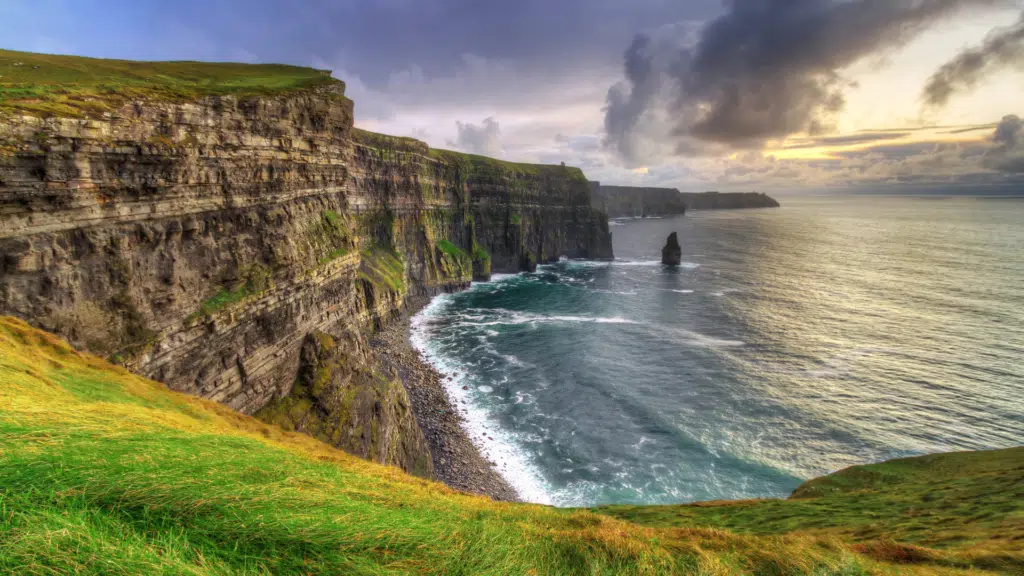
The visitor center at the Cliffs of Moher is built into the hillside and provides abundant learning opportunities about the geology, wildlife, and history of the area. It’s quite the visitor center.
Visit early morning or late afternoon to avoid peak crowds and catch the best light for photographs. The weather changes rapidly here, so bring layers and waterproof gear even on seemingly nice days. The wind was fierce along the cliff edge.
Ring of Kerry
The Ring of Kerry is a 111-mile circular route offering some of Ireland’s most spectacular coastal and mountain scenery. This is one of the best places to travel in Ireland for dramatic landscapes.
Drive it counterclockwise to go with the tour bus flow, or clockwise for more opportunities to pull over for photos. Key stops include Killarney town, Ladies View, Moll’s Gap, Kenmare town, and the various viewpoints overlooking the Atlantic.
Allow a full day for the drive without rushing, or better yet, spend 2-3 days to really explore side roads, take coastal walks, and enjoy the villages. The Skellig Ring is a quieter branch off the main ring that offers even more dramatic coastal views.
Cork and Blarney
Cork city offers a different flavour of Irish urban life compared to Dublin. There’s a a distinct local culture and the famous English Market selling local produce, meats, cheeses, and prepared foods. The city sits on the River Lee, with hilly streets and colourful buildings that make for great photo backdrops
Just outside Cork, Blarney Castle attracts visitors from around the world who come to kiss the Blarney Stone and supposedly gain the gift of eloquence. Whether you believe in the legend or not, the castle itself is beautiful, and the grounds are extensive with gardens, caves, and walking paths worth exploring.
The nearby coastal towns of Kinsale and Cobh make excellent day trips from Cork. Kinsale is known as Ireland’s culinary capital, with excellent restaurants and a picturesque harbour. Cobh was the Titanic’s last port of call and has a moving emigration museum.

Giant’s Causeway and Northern Ireland
While technically part of the United Kingdom, Northern Ireland is often included in Ireland travel itineraries and is absolutely worth visiting. The Giant’s Causeway is a UNESCO World Heritage site featuring about 40,000 interlocking basalt columns formed by ancient volcanic activity.

The coastal Causeway route includes the Carrick-a-Rede rope bridge, Dunluce Castle ruins, and stunning coastal scenery. Belfast city offers powerful history through the Titanic Museum and political murals, plus a vibrant food and pub scene.
Note that while you can travel freely between the Republic of Ireland and Northern Ireland (no border checks for tourists), you’ll be using British pounds in Northern Ireland instead of euros. Your phone plan may treat it as a separate country for data charges.
Day trips are available from Dublin if not planning to stay near or in Northern Ireland. It’s a long day, but worth it.
Sample Ireland Travel Itinerary Ideas
You’re probably wondering how to structure your trip. Here’s our advice: if you only have a short time, focus on 2-3 main regions rather than trying to see everything.
Ireland looks small, but distances take longer than expected due to narrow roads. You’ll want time to actually enjoy places rather than just checking them off a list.
Sample 7 Day Ireland Travel Itinerary
Here’s an idea for a 2 day Dublin itinerary plus west coast highlights that cover Ireland’s essential must-sees:
Days 1-3: Dublin Base (3 nights)
- Day 1: Arrive Dublin, settle in, explore city centre if time permits (suggestions: Trinity College, Temple Bar area, casual evening pub).
- Day 2: Full Dublin day (suggestions: Guinness Storehouse, Kilmainham Gaol, Dublin Castle, Brazen Head Pub, leisurely dinner).
- Day 3: Day trip to Newgrange and Trim Castle (both in County Meath, easy day trip, back to Dublin for dinner).
Days 4-6: Galway/Doolin Base (3 nights)
- Day 4: Morning drive to Galway (2.5 hours), check in, explore Galway city in afternoon (Latin Quarter, Shop Street, evening traditional music session).
- Day 5: Day trip to Cliffs of Moher and the Burren (both easy from Galway or consider staying in Doolin village for closer access and excellent traditional music).
- Day 6: Connemara day trip OR relaxed Galway day (coastal walks, markets, more pubs, Aran Islands boat trip if interested).
Day 7: Return to Dublin (departure day or 1 extra night)
- Drive back to Dublin via Glendalough (2.5-3 hours total with stop) – departure day or extra night in Dublin and depart Day 8.
This covers what many consider Ireland travel guide highlights, day trips from Dublin Ireland including the Newgrange Ireland monument, the journey from Dublin to Cliffs of Moher, and Galway Ireland’s charm. It’s a packed week, but hits major highlights. If you are unable to drive back to Dublin the same day you depart, either cut Day 6 above and instead return to Dublin for 1 night, or leave Dublin on Day 8.
Sample 14 Day Ireland Travel Itinerary
Days 1-3: Dublin Base (3 nights in Dublin)
- Day 1: Arrive, explore city centre at leisure, if time permits (suggestions: Trinity College, Georgian doors walk, Temple Bar).
- Day 2: Full Dublin day (more suggestions: Guinness Storehouse, Kilmainham Gaol, EPIC Museum, Dublin Castle, Brazenhead Pub).
- Day 3: Howth cliff walk day trip (easy coastal train ride, fresh seafood lunch, back to Dublin for evening).
Days 4-7: Galway Base (4 nights in Galway or Doolin)
- Day 4: Drive to Galway via Newgrange and Trim Castle. Both are in County Meath. Book Newgrange in advance. This breaks up the drive nicely. Then check into Galway accommodation, explore city in late afternoon/evening.
- Day 5: Full Galway day (sleep in, explore markets, coastal Salthill walk, afternoon in pubs, evening music session).
- Day 6: Cliffs of Moher and the Burren day trip (consider staying in Doolin instead of Galway for all 4 nights if you want to be closer to the cliffs and experience the incredible traditional music scene).
- Day 7: Connemara National Park day trip (stunning scenery, Diamond Hill hike, quaint villages) OR relaxed beach day at local spots.
Days 8-10: Dingle Base (3 nights)
- Day 8: Drive to Dingle Peninsula (3 hours from Galway), check into Dingle town accommodation, explore colourful town, harbour walk.
- Day 9: Slea Head Drive (spectacular coastal loop, ancient sites, beaches, take your time with stops).
- Day 10: Killarney National Park (Torc Waterfall, Muckross House, Gap of Dunloe). Note: if you stay in Killarney instead of Dingle, you’ll be closer to the park, but farther from Slea Head Drive.
Days 11-12: Cork/Kinsale Base (2 nights in Kinsale)
- Day 11: Drive to Kinsale (2 hours from Dingle/Killarney), check in, Ireland’s culinary capital, colourful harbour town, excellent restaurants.
- Day 12: Blarney Castle morning, Cork city afternoon (English Market, colourful streets), return to Kinsale for evening.
Days 13-14: Return to Dublin (1 night in Dublin)
- Day 13: Drive to Dublin via Rock of Cashel and Kilkenny (both excellent stops or choose one), or drive via Glendalough for Wicklow Mountains scenery. Stay near Dublin airport if you have an early Day 14 flight.
- Day 14: Final Dublin morning, departure OR skip Cork/Kinsale and add these days to other bases for even more relaxation.
This Ireland travel itinerary covers the highlights without feeling rushed. You get Dublin attractions, day trips from Dublin Ireland, Galway Ireland, the journey from Dublin to Cliffs of Moher, and the spectacular southwest coast.
Pro Tip
Build in buffer time for weather. If it’s pouring rain on your planned Cliffs of Moher day, having flexibility to adjust means you can visit on a clearer day for better views and photos. Irish weather is unpredictable; flexible itineraries work best.
How to Travel Around Ireland: Transportation Options
Understanding how to travel around Ireland is crucial for planning your trip. The best way to travel in Ireland depends on your itinerary, budget, and comfort level, but you have several good options.
Renting a Car (Our Recommendation)
We absolutely recommend renting a car for Ireland travel. Personally, we love the freedom to explore at our own pace, stop at scenic viewpoints, discover hidden villages, and adjust your Ireland travel itinerary on the fly is invaluable. This is genuinely the best way to travel in Ireland for flexibility and reaching remote areas.
If you are travelling to Ireland with kids, this is the most convenient option for flexibility and when the need strikes to take unplanned breaks along the way.
The base daily rate for car rentals in Ireland is fairly reasonable. Automatic transmissions cost significantly more than manual (stick shift), so if you can drive manual, you’ll save money.
Third party liability and Collision Damage Waiver insurance are required and adds to the daily cost. If your credit card covers Ireland for CDW, you may be able to have this waived with a letter of authorization. Inquire about this with your credit card company and rental provider before your trip.
Here’s what you need to know: you’ll be driving on the left side of the road, roads are often quite narrow (especially in rural areas), and roundabouts are everywhere.
Parking in cities can be challenging and expensive. In Dublin, we recommend using your car only for day trips and leaving it parked at your accommodation when exploring the city centre. Parking and walking or using public transportation within cities is way more convenient and way less stressful.
Pro Tip
Book your rental car well in advance, especially for summer travel. Prices increase dramatically for last-minute bookings. Also, consider adding an additional driver if you’ll be sharing driving duties; the fee is worth it for flexibility and safety on long driving days.


Travel Ireland by Train
If you want to travel Ireland by train, Irish Rail connects major cities reasonably well. The trains are comfortable, reliable, and offer scenic journeys, especially the route from Dublin to Galway or Dublin to Cork. This is a good option for those who are uncomfortable with driving on the left.
The rail network; however, doesn’t reach many smaller towns and rural areas. You’ll miss places like the Dingle Peninsula, Ring of Kerry, smaller coastal villages, and many remote attractions. Trains work best for city-to-city travel, but you’ll need buses, tours, or rental cars to explore beyond major jumping-off points.
Pro Tip
Book tickets in advance online for better prices. First class offers more space, but isn’t necessary for most journeys. Weekend and off-peak tickets may provide savings.
Bus Travel
Bus Éireann operates an extensive network reaching most towns. Buses are affordable and comfortable. Private companies like GoBus and Aircoach also serve popular routes, sometimes with better schedules or prices than the national carrier.
The downsides? Buses are slow, with many stops along routes. Schedules can be infrequent in rural areas, sometimes with no Sunday service. You’re also tied to fixed timetables and routes, limiting spontaneity.
For budget travellers or those travelling between major towns, buses work fine. For broader exploration, they’re limiting.
Organized Tours
Day tours from Dublin and Galway reach major attractions like the Cliffs of Moher, Newgrange, Glendalough, and the Ring of Kerry. Multi-day tours cover larger regions with accommodation, transport, and guides included.
Tours solve the driving-on-the-left anxiety and provide historical context from knowledgeable guides. The trade-offs are fixed schedules, tourist-focused stops, and less flexibility. They’re worth considering for specific difficult-to-reach destinations or if you want the commentary and social aspect.
Dublin Public Transport
Dublin has excellent public transportation including Dublin Bus, the LUAS tram system, and DART suburban rail. Get a Leap Card for discounted fares across all systems. Most Dublin attractions are walkable in the compact center, but public transport efficiently reaches suburbs and coastal towns like Howth.
Where to Stay in Ireland
Choosing accommodation is crucial for any Ireland travel itinerary. Ireland offers options for every style and budget, from backpacker hostels to luxury castle hotels.
Just keep in mind that prices in Dublin are on average 15-20% higher than outside the capital city. Prices also vary between high and low seasons so we just listed an average for Dublin and outside Dublin over the course of a year, as a guideline.
Note that all accommodation types are based on double occupancy (2 people sharing) per night, except dorm style rooms in hostels, which are per person per night.
Dublin City Accommodations
Budget
Hostels in Dublin run on average €40–€80 ($48–$96 USD) per person for dorm style rooms or €80–160 ($120–$192 USD) per private room, which may or may not have a private bathroom.
Ireland has excellent hostels, many in historic buildings with character. They’re social, clean, and great for solo travellers or those looking to meet others.
Budget hotels (1-2★) in Dublin can average €80–€180 ($96–$216 USD) per room. They are often small, clean, no-frills hotel rooms with essential amenities. Budget vacation rentals often fall in the same price range as budget hotels.
Budget B&Bs offer more privacy than hostels with Irish breakfast included. The breakfast alone saves you €10–€15 ($12–$18+ USD) daily on meals. Expect to pay in the neighbourhood of €100–€180+ ($120–$216 USD) per room per night.
Mid-Range
Mid-Range Hotels in Dublin (3-4★) are comfortable rooms with private bathrooms, daily housekeeping, and sometimes breakfast. 4★ hotels will give you larger rooms, often with more modern décor, and a higher level of service.
You should find 3★ hotels range from €150–€230 ($180–$276 USD) per room and 4★ options averaging €200–€300+ ($240–$360+ USD) per room.
Mid-Range B&Bs are usually boutique guesthouses with high-quality breakfast options, nicer décor, and a more personalized service. They tend to range €150–€300 ($180–$360 USD) per room.
Mid-range vacation rentals are often in the same range as B&Bs. You may forego breakfast with a vacation rental, but at least you’ll have a kitchenette or full kitchen for added convenience (great if travelling with kids!).
Luxury
Luxury hotels in Dublin (5★) offer premium service and finishes, luxury amenities, central locations. You may also find breakfast included. This level of hotel will have a price tag of at least €350–€600+ ($420–$720+ USD) per room, per night.
Fine B&Bs in upscale guesthouses with gourmet breakfast, premium décor, and top-notch service should run between €300–€500+ ($360–$600+) per room.
Expect to pay at least €300–€600+ ($360–$720+ USD) per property for upscale vacation rentals. The more centrally located in popular areas will have higher rates.
Accommodations Outside Dublin
Budget
Hostel – Dorm Style: €30–€60 ($36–$72 USD) per person
Hostel – Private Room: €65–130 ($78–$156 USD) per room
1-2★ Hotel & Vacation Rentals: €65–€145 ($78–$174 USD)
Budget B&B: €80–€145+ ($96–$174 USD)
Mid-Range
3★ Hotel: €120–€185 ($144–$222 USD)
4★ Hotel: €160–€240+ ($192–$288+ USD)
Mid-Range Vacation Rental & B&Bs: €120–€240 ($144–$288+) per property
Luxury
5★ Hotels & Vacation Rentals: €280–€480+ ($336–$576+ USD)
Luxury B&B / Boutique Inn: €240–€400+ ($288–$480+)
Ireland’s luxury scene includes castle hotels, manor house estates, and five-star properties. Prices can exceed $1,000(s) for exclusive castle stays. These properties offer top-notch service, gourmet dining, spa facilities, and unique settings.
Staying in a castle, even for one night, creates lasting memories. Properties like Ashford Castle, Dromoland Castle, or Ballynahinch Castle blend luxury with history.

Location Tips
Book Dublin accommodations near public transport or in walkable neighbourhoods like Temple Bar, Grafton Street area, or Smithfield (that said be prepared to pay for the location and convenience). For countryside stays, location matters less since you’ll be driving. Coastal towns book up in summer, so reserve early. Check if parking is included, especially in cities where it’s expensive.
Even though we said that outside Dublin can be 15-20% cheaper, popular tourist towns such as Galway can be similarly priced the capital city.
Note: The estimates we gave here are merely that, estimates. There are many factors that affect price such as popularity of an area, location to popular attractions, time of year, etc. We just list ballpark numbers to help with an idea of costs, but at times you may find them to be way off what you actually find for prices. As mentioned, Ireland is quite pricey.

Ireland Currency & Money Matters
The Republic of Ireland uses the euro (€), while Northern Ireland uses the British pound sterling (£).
Using Euros in the Republic
ATMs are everywhere in cities and towns, and most accept international cards. We found withdrawal fees to be equivalent to about $3-$5 USD per transaction from the ATM operator, plus whatever your bank charges. The exchange rate at ATMs is typically better than exchanging cash before your trip or at currency exchange offices.
Notify your bank before travelling to Ireland to avoid card blocks. We use travel credit cards with no foreign transaction fees to save 2-3% on all purchases. These savings add up significantly over a week or two of travel.
Credit Cards
Most restaurants, hotels, shops, and larger businesses accept credit cards. Visa and Mastercard are widely accepted; American Express less so. Some small businesses and rural B&Bs prefer cash or add small surcharges for card payments.
We used our credit card for most major purchases to earn points and avoid carrying large amounts of cash.
Tipping Culture
Tipping in Ireland is appreciated, but not as expected as in the Canada and United States (for example). In restaurants, 10-12% is standard for good service if a service charge isn’t already included (check your bill). Some restaurants add a service charge automatically, especially for larger groups.
For taxi drivers, round up to the nearest euro or add about 10% for longer rides. Hotel porters appreciate €1-2 per bag. Housekeeping in hotels: €2-€4 per night is thoughtful. Tour guides: €5-10 per person for day tours, depending on quality and length.
In pubs, you don’t normally tip for drinks ordered at the bar (which is most pubs). If you have table service in a pub for food, then tip as you would in a restaurant
Northern Ireland Currency Note
If visiting Northern Ireland (Giant’s Causeway, Belfast), remember you’ll need British pounds, not euros. Some places near the border accept euros, but give poor exchange rates.
ATMs in Northern Ireland dispense pounds. Your phone plan may treat Northern Ireland separately from the Republic for data charges, so check your plan.
Planning Your Budget: What Does Ireland Really Cost?
Giving an idea of what your trip may cost is essential in any Ireland travel guide and for planning to travel Ireland on a budget (if that’s your goal). Ireland is considered to be more expensive than many European destinations, but with smart planning, you can manage costs.
Here’s a realistic breakdown of prices to help you plan. Estimated budget is per person, per day. Prices are quoted in Euro (USD). Note that exchange rates fluctuate. Here we used a conservative rate of 1.20 EUR to USD.
Budget Travel: €70-€162 ($84-$195)
- Accommodation: Hostels,1-2★ hotels, budget B&Bs and vacation rentals, camping for the adventurous – €30-€90 ($36-$108)
- Food: Supermarket meals, budget cafes, occasional pub meal – €16-€32 ($20-$40)
- Transportation: Public buses, walking, occasional trains – €8-€20 ($10-$25)
- Activities: Free attractions, minimal paid entry fees – €8-€20 ($10-$25)
This works if you’re staying in hostels, cooking many meals, using public transport, and focusing on free attractions like coastal walks, historic town centres, and nature.
Mid-Range Travel: €155-€360 ($186-$432)
- Accommodation: Comfortable B&Bs, mid-range hotels and vacation rentals €60-€180 ($72-$216) per person, but based on double occupancy.
- Food: Mix of pubs, restaurants, and some self-catering €40-€80 ($50-$100)
- Transportation: Rental car or mix of trains/buses €25-€40 ($30-$50)
- Activities: Attraction entries, some guided tours €30-€60 ($36-$72)
This is where we usually land. You get comfortable accommodations, can eat at good restaurants, enjoy a rental car for flexibility, and don’t have to stress about costs for attractions you want to visit.
This range allows you to experience Ireland comfortably without luxury prices (even though it still seems high… but that’s Ireland).
Luxury Travel: €420-€1,000+ ($504-$1,200+)
- Accommodation: High-end resorts, private villas ($150-250+, based on double occupancy)
- Food: Fine dining, resort meals ($70-$125+)
- Transportation: Private shuttles, luxury rental cars ($40-$75)
- Activities: Premium tours, spa treatments, exclusive experiences ($40-$150+)
If you want the ultimate Ireland travel experience with castle stays, Michelin-starred dining, private tours, and no budget concerns, this level lets you enjoy Ireland’s finest offerings without compromise (if you can afford it!).
11 Money Saving Tips Ireland: How to Travel Ireland on a Budget
Ireland isn’t cheap, but these money saving tips Ireland travellers use will help you stretch your budget further. Here’s how to travel Ireland on a budget without sacrificing experiences.
1. Visit in Shoulder Season
Late April-May and September-early October offer pleasant weather, fewer crowds, and significantly lower prices on accommodations and car rentals. You may save 25-40% compared to peak summer rates just by shifting your dates by a few weeks.
2. Book Accommodations with Breakfast Included
Irish breakfasts are substantial, typically including eggs, bacon, sausage, toast, and more. Staying somewhere that offers breakfast saves you €10–€15 ($12–$18+) daily per person compared to eating out. Many B&Bs include generous breakfasts as standard, making them excellent value.
3. Shop at Supermarkets for Snacks and Picnic Supplies
Grab sandwiches, fruit, and snacks at Tesco, Supervalu, or Lidl for a fraction of cafe prices. Having picnic supplies lets you eat lunch at scenic spots along your route rather than paying for restaurant meals. The savings add up quickly, especially for families.
Being from Canada where food prices are notoriously high, we found grocery store prices here to be cheaper than what we pay at home, on average. That was a pleasant surprise for sure!
4. Eat Lunch as Your Main Meal
Many restaurants offer lunch specials or early bird menus with the same quality food at lower prices than dinner (if you don’t mind eating your main meal earlier). A substantial lunch lets you have a lighter, cheaper dinner. Pub lunches are particularly good value, offering hearty portions for reasonable prices.
5. Book Rental Cars Early and Compare Prices
Rental car prices skyrocket for last-minute bookings. Book months in advance for best rates. Compare prices across multiple companies and booking sites. Consider manual transmission over automatic to save €10-€20+ ($12-$24) daily. The car will probably be the second biggest expense after accommodation, so shop carefully.
DiscoverCars.com makes comparing rental prices easy. Don’t, however, opt for 3rd party insurance here unless you have confirmed it’ll be valid as in some countries it isn’t).
6. Take Advantage of Free Attractions
Many of Ireland’s best experiences are free: coastal walks, historic town centers, Belfast’s political murals, Phoenix Park in Dublin, beach towns, hiking trails, and simply driving scenic routes. Mix free activities with a few paid attractions to balance your budget.
There are also castle-type ruins throughout the area with free entry where you can explore both the grounds and the structures themselves. One gem we discovered was Bective Abbey, a medieval Cistercian monastery located a short drive northeast of Trim. It was fascinating to wander through and completely free!

7. Consider a Dublin Pass for Attraction-Heavy Visits
If planning to visit multiple Dublin attractions, the Dublin Pass can save money. It covers entry to 30+ attractions including the Guinness Storehouse, Dublin Castle, and various museums. Calculate whether it makes sense for your specific Ireland travel itinerary.
8. Use Cash for Small Purchases to Avoid Fees
While cards are widely accepted, some small shops and cafes prefer cash or add surcharges for card payments under certain amounts. Withdraw larger amounts from ATMs to minimize transaction fees. Using cash at local markets and small businesses often gets you better value.
9. Stay in Towns Rather Than Tourist Centers
Accommodations in places like Dublin, Galway, Killarney, or Dingle town cost more than staying in nearby smaller villages. You can often find cheaper, equally charming accommodations a 10-15 minute drive from major attractions. This is one of the best money saving tips Ireland road trippers use.
10. Travel Independently Rather Than Taking Organized Tours
Day tours are often pricey. Renting a car and driving yourself to the same destinations will likely cost less when split among multiple people, plus you get flexibility. For solo travelers, tours might make more sense, but for couples, families, or groups, independent travel saves money while offering more freedom to stop at road side attractions or take detours.
11. Get Your VAT Tax Refund (Non-EU Visitors)
If you’re visiting from outside the EU, you can reclaim the VAT (Value Added Tax) on purchases made in Ireland. This can save you a significant amount of money. Ireland’s standard VAT rate is 23%, which means you can get nearly a quarter of your money back on eligible purchases.
We saved over $100 on our trip by claiming VAT refunds souvenirs we were buying anyway. It’s literally free money back for purchases you’re already making. Just don’t forget to get the forms filled out at each shop!
For more information on this program, click HERE.
Is Ireland Safe for Travel?
This is always one of the top questions people ask about almost any country, and we’re happy to share our honest experience: yes, Ireland is very safe for travel. It’s consistently on top 10 lists of safest countries in Europe and often the world with relatively low crime rates.
We felt comfortable and safe on our travels in Ireland. The Irish are genuinely friendly and helpful, and violent crime is rare.
Ireland has stable government, excellent infrastructure, and a strong tourism industry that maintains high safety standards. Solo travelers, including women, generally feel safe throughout the country.
Common Sense Precautions
That said, we always follow basic safety practices:
- Don’t leave valuables visible in rental cars (break-ins can happen in parking areas near popular tourist spots)
- Use hotel safes for passports, extra cash, and electronics
- Stay aware of your surroundings in crowded areas and at night
- Watch your drinks in pubs (spiking is rare, but not unheard of in any country)
- Be cautious of pickpockets in very crowded tourist areas like Temple Bar in Dublin
5 Things to Know When Travelling to Ireland
Here are essential things to know when travelling to Ireland that we learned from our time exploring the country. These tips will help you make the most of your Ireland travel adventure.
1. Pack for All Weather (Yes, All of It)
The Irish saying ‘four seasons in one day’ is absolutely true. We experienced sunshine, rain, wind, and even hail within a few hours. Pack layers: base layers, a warm mid-layer, and a waterproof outer shell. A good rain jacket is essential, not optional.
Bring waterproof shoes or boots. Your feet will thank you after walking on wet grass at ancient ruins or navigating rainy city streets. Quick-dry clothing helps since things may not dry overnight in humid Irish weather. Don’t overpack; you can layer the same items multiple ways.
2. Bring the Right Electrical Adapter
Ireland uses Type G plugs (three rectangular pins) and 230V electricity. Bring a universal adapter or UK-specific adapter for all your devices. Most modern phone chargers and laptop adapters handle 230V automatically, but check your devices to be sure.
3. English is Spoken, But Learn Some Irish Phrases
Everyone speaks English in Ireland, so communication is easy for English speakers. However, Irish (Gaelic) is the first official language, and you’ll see it on road signs and hear it in Gaeltacht regions.
Learning a few phrases shows respect: ‘Sláinte’ (slawn-che) means cheers, ‘Céad míle fáilte’ (kayd meela fawl-che) means a hundred thousand welcomes, and ‘Go raibh maith agat’ (guh rev mah ah-gut) means thank you. Locals appreciate the effort even if your pronunciation isn’t perfect.
4. Understand Road Sign Distances
Road signs in the Republic of Ireland show distances in kilometers, while Northern Ireland uses miles. This can be confusing when crossing the border. Your rental car speedometer will likely show both, but pay attention to which unit your GPS is using (if applicable).
5. Book Popular Attractions in Advance
Major Dublin attractions like the Guinness Storehouse, Book of Kells, and Kilmainham Gaol sell out during peak season. Newgrange Ireland monument has very limited daily entry and requires advance booking. The Cliffs of Moher don’t require reservations, but get extremely crowded midday in summer.
Our Favourite Ireland Moments
Some of our favourite Ireland moments are the ones that keep coming up when talking about our travels.
We spent a couple days just wandering Dublin’s streets, getting completely lost among those gorgeous Georgian doors and cobblestone alleys. Our feet definitely felt it by evening! We’d bought a hop-on-hop-off double decker bus pass, but honestly, walking ended up being our favourite way to explore.
Lunch at the famous Temple Bar? Absolutely worth it, even though we paid nearly double for our Guinness. It’s an atmosphere you have to experience at least once!
The Guinness Storehouse was pretty cool. We thought it might be one of those over-hyped tourist traps, but learning how they brew it, attempting (and mostly failing) to pour the perfect pint ourselves, and then sipping our reward while taking in the 360-degree views from the Gravity Bar was quite a bit of fun. Only downside was that we thought it to be a overpriced (but don’t let that stop you if it’s something of interest).
Newgrange was a wow for us. Standing inside a 5,000-year-old passage tomb that’s older than the pyramids gave us actual goosebumps. We kept trying to wrap our heads around the fact that people built this incredible astronomical monument before there were metal tools or wheels.
At Trim Castle, we wandered the massive grounds for well over an hour, then took the castle tour. We climbed up narrow spiral staircases in the keep and stood on top of the tower walls. The guided tour was worth it to learn more about the ins and outs of the castle and time periods.
Nearby Trim Castle, we had an amazing Sunday roast at Castle Arch Hotel. Tender beef, perfectly crispy Yorkshire puddings, and all the traditional fixings. This is a must-try.
The Cliffs of Moher? They’re every bit as dramatic as the photos suggest, maybe more. Standing there with 700-foot cliffs dropping into the crashing Atlantic below, wind absolutely whipping around us. It was fresh to say the least, but so worthwhile.
Galway just stole a piece of our hearts. Amazing dinners at cozy little restaurants, traditional music playing in the streets, and a cool bohemian-type vibe everywhere you go.
Final Thoughts For Your Ireland Travel Adventure
We hope this Ireland travel guide has given you everything you need to start planning your ultimate Irish adventure. We’ve tried to provide all the practical information you need to get your plans underway.
Whether you’re exploring Dublin attractions, taking day trips from Dublin Ireland to visit Trim Castle Meath and the Newgrange Ireland monument, making the journey from Dublin to Cliffs of Moher, experiencing the magic of Galway Ireland, or discovering your own favourite spots, Ireland offers experiences that you will never forget.
The most important advice we can give? Be flexible, embrace the weather (yes, even the rain), and let yourself slow down to Ireland’s often chill pace.
We hope these tips on how to travel around Ireland, our money saving tips Ireland travellers use, our recommendations for the best time to travel to Ireland, our sample Ireland travel itinerary ideas, and all the practical information in this travel guide to Ireland help you plan the trip of a lifetime.
What part of this Ireland travel guide has you most excited to start planning? Is it the Dublin attractions, the day trips from Dublin Ireland, the journey from Dublin to Cliffs of Moher, experiencing Galway Ireland’s music scene, or discovering hidden gems off the beaten path?
Remember: there’s no one right way to experience Ireland. Build an Ireland travel itinerary that matches your interests, your pace, and your budget. This is your adventure!
If you enjoyed this guide, please pin it on Pinterest, save it, and share it with anyone else who might be dreaming of Ireland!
May the road rise to meet you.
Irish Proverb
