Figuring out which Hawaiian island to visit is honestly one of the best travel dilemmas you can have. We’ve stood in your shoes, flip-flops and all, staring at a map of the Pacific and wondering: do we go back to the Big Island? Try something new on Kauai? Finally do Maui?
Hawaii has six main islands, and while they all share the same gorgeous ocean backdrop, each one has a completely different personality. Some are wild and raw. Some are polished and romantic. Some are ideal for first-timers, and some reward the traveller who wants to go a little deeper.
We’ve been lucky enough to explore all four of the main Hawaiian islands (more than once), and we’re sharing everything we’ve learned to help you figure out which one is calling your name. Whether you’re chasing waterfalls, hunting lava fields, lounging on world-class beaches, or just looking for a relaxed family adventure, there’s an island that’s perfect for you.
Let’s get to it!
Out Roaming Life contains affiliate links and is a member of the Amazon Services LLC Affiliate Program.
If you make a purchase using one of our links, we may receive compensation at no extra cost to you.
We only recommend products and services we trust. Read our disclaimer for more information.
Quick Comparison: Hawaiian Islands at a Glance
Not sure where to start? Here’s a quick overview before we dig into each island in detail.
| Island | Best For | Beaches | Adventure | Budget | Crowds |
|---|---|---|---|---|---|
| Big Island | Adventure + variety | ★★★★ | ★★★★★ | $$ | Low |
| Kauai | Hiking + nature | ★★★★ | ★★★★ | $$$ | Medium |
| Maui | Romance + beaches | ★★★★★ | ★★★ | $$$ | High |
| Oahu | Budget + city | ★★★ | ★★★ | $ | Very High |
| Lanai | Luxury seclusion | ★★★ | ★★ | $$$$ | Very Low |
| Molokai | Authentic culture | ★★ | ★★ | $ | Very Low |
THE BIG ISLAND: Our Top Pick for Adventure and Variety
The Big Island is our favourite Hawaiian island. If you’re trying to decide which Hawaiian island to visit and you want the most variety, the most adventure, and a genuinely laid-back local vibe, this is it. The Big Island lives up to its name. It’s nearly twice the size of all the other Hawaiian islands combined.
One of the things that always amazes us is how dramatically different the island is depending on where you are. You can be snorkelling in warm, calm turquoise water on the sunny Kohala Coast in the morning, and standing at the edge of an active volcano by afternoon. There’s no other place on Earth quite like it.
Memorable Beaches on the Big Island
The Big Island has some spectacular beaches, and our hands-down favourite is Hapuna Beach. It’s a long, wide stretch of white sand with clear, blue water and it consistently ranks among the best beaches in the United States. Go on a weekday if you can, as it does get busy on weekends.
Beyond Hapuna (and some other great west-shore beaches), the island has something no other Hawaiian island can fully match black and green sand beaches. Punalu’u Black Sand Beach on the south shore is an amazing spot where jet-black volcanic sand meets the ocean, and it’s not uncommon to spot Hawaiian green sea turtles basking on shore. It’s a favourite with locals, and absolutely worth the drive.
And then there’s Papakōlea Beach (also known as Green Sand Beach), one of only two green sand beaches in the entire world. Getting there requires a roughly 4 km (2.5 mi) hike each way from the South Point parking area. It’s also hot, exposed, and windy, so bring plenty of water and sunscreen. The surf at the beach itself can be rough, so it’s more of a sightseeing and photography experience than a swimming spot. Worth every step.
10 Things to Do on the Big Island
The Big Island rewards explorers. Here are 10 things to do on the Big Island of Hawaii that we loved and recommend checking out:
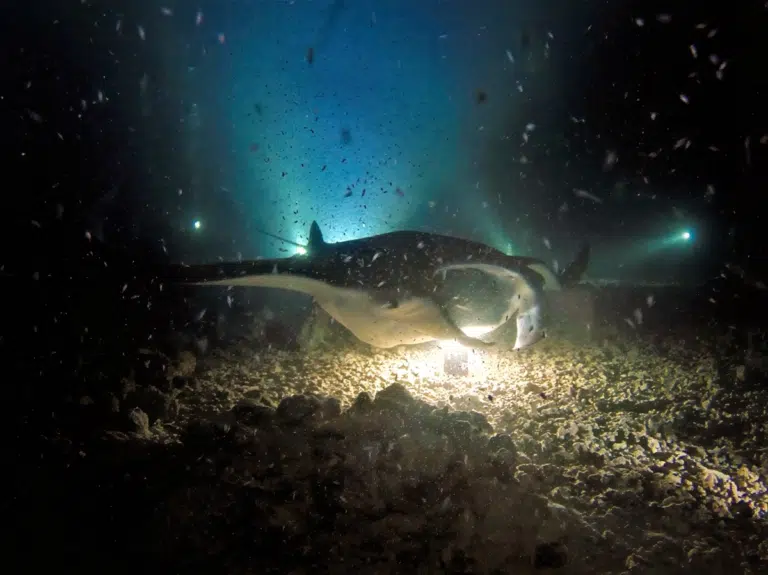
- Kona Manta Ray Night Dive and Snorkel: This is one of the most unique wildlife experiences in Hawaii. Diving or snorkelling with giant manta rays under the lights at night is something we still talk about, and dream about doing again.
- Snorkel at Captain Cook (Kealakekua Bay) and Two-Step: Hike down the trail at Captain Cook to one of the best snorkelling spots in all of Hawaii. The water is crystal clear, the fish are abundant, and spinner dolphins are common. Nearby, Two-Step (Honaunau Bay) is another outstanding snorkel spot. It’s named for the two natural lava rock steps used to enter the water. Two-Step is a favourite with locals and well worth combining with a visit to the historical park next door.
- Hawaii Volcanoes National Park: This is one of the coolest places to visit and is home to Kilauea volcano. Kilauea is one of the most active volcanoes on Earth and recent eruption activity has made the vistas even more amazing. Walking through lava tube caves, standing at the rim of a glowing caldera, and seeing landscapes that look straight out of another planet is something you don’t forget. Budget a full day here at minimum.
- Punalu’u Black Sand Beach and Papakolea Green Sand Beach: Punalu’u on the south shore is a place where jet-black volcanic sand meets the ocean. It’s also not uncommon to spot Hawaiian green sea turtles basking on shore. Nearby, Papakolea is one of only two green sand beaches in the entire world. Its striking colour coming from olivine crystals eroded out of a 49,000-year-old volcanic cone.
- Akaka Falls: On the lush east side of the island, this stunning 135 m (115 ft) waterfall plunges into a gorge surrounded by dense tropical greenery. It’s a relatively easy walk and completely worth the stop if you’re exploring the east shore.
- Hale o Keawe (Pu’uhonua o Honaunau National Historical Park): This sacred place of refuge is one of the most historically and culturally significant sites on the Big Island. Ancient Hawaiians who broke sacred laws could seek sanctuary here and be absolved. The grounds are beautifully preserved, with carved ki’i pohaku (wooden statues), a reconstructed royal mausoleum, and a stunning coastal setting. It’s a deeply moving place and pairs perfectly with a Two-Step snorkel visit right next door.
- Uncle Robert’s Wednesday Night Market near Pahoa: If you’re on the east side midweek, don’t miss this. It’s a lively local market with food, music, and serious aloha spirit. The Hilo area in general has laid back local feel to it. While it can look a bit worn around the edges, that’s part of its charm.
- Parker Ranch (Waimea): The upcountry town of Waimea is a lovely inland stop. It has a cowboy country feel and cooler temperatures. The Parker Ranch offers both horseback riding and UTV tours through the rolling ranch land. It’s a side of Hawaii most visitors never see, and we really enjoyed it.
- Sunset from Mauna Kea Visitor Centre: You don’t need to summit to have a memorable Mauna Kea experience. The Visitor Centre at around 2,800 m (9186 ft) is accessible without a 4WD. Watching the sunset from up there, with the clouds below you and the stars beginning to appear, is one of our favourite Hawaii memories.
- Kailua-Kona for Food and Drinks: The main town on the west side is a great spot to eat well and relax. Take advantage of happy hour deals to stretch your budget, especially at the waterfront spots along Ali’i Drive.
Big Island with Kids
The Big Island is one of the best Hawaiian islands for travelling to Hawaii with kids. Hawaii Volcanoes National Park is a huge hit with its lava tube caves, steaming craters, and glowing calderas. Beyond the volcano, Punalu’u Black Sand Beach is a fun stop. Kids love its unique black sands and resident Hawaiian green sea turtles.
Hapuna Beach is brilliant for families, calm enough for little ones on quieter days and great for boogie boarding when there’s a bit of surf. Spencer Beach Park is another great option, with a protective reef that keeps the water calm, and Magic Sands near Kona is a fun low-tide spot for kids.
The Big Island is genuinely one of the best Hawaiian islands for families, and that’s just scratching the surface.
Our Take: The Big Island is the answer if you’re asking which Hawaiian island to visit for adventure, variety, and an experience that feels genuinely off the tourist conveyor belt.
KAUAI: Our Second Favourite for Raw Beauty and Hiking
Kauai is the island that makes your jaw drop first and your legs ache second. It’s the oldest of the main Hawaiian islands. Here millions of years of erosion have carved it into one of the most dramatic landscapes on Earth. The Na Pali Coast alone is worth the trip.
Kauai is our second favourite island. It’s the one we’d recommend most for travellers who want adventure, but on a slightly more intimate scale than the Big Island.
It’s smaller and less developed than Maui or Oahu, which is very much part of its appeal. Kauai rewards slow travel and people who are happy to get a little muddy.
Memorable Beaches on Kauai
Our favourite beach area was Poipu on the south shore, which offers reliably sunny weather and beautiful swimming beaches. Poipu Beach Park is great for families and has a resident Hawaiian monk seal that shows up regularly.
On the complete opposite end of the island, Ke’e Beach at the end of the north shore road is stunningly beautiful and marks the start of the Na Pali Coast Trail (Kalalau Trail). The snorkelling is fantastic in calm conditions (summer is best). We made many core memories here!
These are but a couple amazing beaches to experience on Kauai!
10 Things to Do on Kauai
There are many amazing things to do on Kauai. Here’s a list of things we highly recommend.
- Na Pali Coast: Whether you hike it (the Kalalau Trail is one of the most scenic hikes in the world), kayak it, or see it from a boat or helicopter, the Na Pali Coast is simply breathtaking. There is really no bad way to experience it.
- Waimea Canyon: Often called the Grand Canyon of the Pacific, this is one of the most stunning viewpoints in all of Hawaii. Drive up to the lookout and hike the rim trails for views that stretch for miles. It was also featured in the Jurassic Park and Jurassic World movies, along with several other Kauai locations.
- Waimea Canyon Hikes: The canyon has trails for all levels, including the Kukui Trail that descends into the canyon floor. The Awaawapuhi Trail is another standout, ending at a dramatic ridgeline overlook above the Na Pali valleys.
- Hanalei Valley and Town: The lush, green Hanalei Valley is iconic, and Hanalei town has a lovely small-town feel with great food and a relaxed pace. The one-lane bridges along the north shore road are part of the charm.
- Kayaking the Wailua River: A great adventure option to paddle through jungle scenery to the stunning Uluwehi Falls, also known as Secret Falls. Most people do this as a guided tour, but independent kayak rentals are available if you prefer to explore on your own.
- Waterfalls: Kauai is loaded with dramatic cascades. Wailua Falls is one of the most accessible and recognizable falls. It’s powerful double-tiered falls drop around 24 m (80 ft). Wailua Falls was famously featured in the opening credits of the original Fantasy Island TV series. Opaekaa Falls nearby is another easy roadside stop with great views.
- Snorkelling Beaches: Kauai has some excellent snorkelling spots. Tunnels Beach (Makua Beach) on the north shore is one of the best on the island. In summer, conditions are calm and an impressive underwater lava shelf has abundant marine life. Poipu Beach on the south shore is reliable year-round and great for beginners. Lydgate Beach Park near Wailua has a protected lava rock enclosure. This makes it ideal for kids and less confident swimmers. Ke’e Beach at the end of the road on the north shore is one of our favourites!
- Scuba Diving: Kauai is an underrated dive destination. Sheraton Caverns near Poipu is one of the most popular dive sites on the island. It has a series of lava tubes and caverns with sea turtles, monk seals, and colourful reef fish. Brennecke’s Ledge and General Store are other well-regarded sites along the south shore. The north shore offers more dramatic wall diving when conditions allow, though it is best suited to experienced divers.
- Spouting Horn Blowhole: Near Poipu on the south shore, this natural lava tube blowhole shoots seawater dramatically into the air with a loud hiss and roar. It’s especially impressive during bigger swells. There is a small vendors market nearby making it an easy and enjoyable stop.
- Helicopter Tour: If budget allows, a helicopter tour of Kauai is one of the best ways to see the Na Pali Coast and the island’s interior valleys. The Waialeale Crater, one of the wettest spots on Earth, is virtually impossible to reach any other way and is an unforgettable sight from the air.
Kauai with Kids
Kauai is a great option for families with older kids and teenagers who are up for some light adventure. That said it works equally well for those with young children thanks to its calm beach options, easy tours, and laid-back vibe.
The Waimea Canyon lookout is a wow moment for children and adults alike, and the shorter, easier trails around the canyon are great for families who want to hike without committing to a full-day trek. Poipu Beach is one of the best family beaches in Hawaii, with calm waters, a protected swimming area, and the bonus of spotting a Hawaiian monk seal on the sand.
The Wailua River kayak trip to a hidden waterfall is a brilliant family outing. Keep in mind that Kauai is smaller and less commercially developed than Maui or Oahu, so it suits families who are happy to embrace a slower, more nature-focused pace. If that sounds like your crew, Kauai is about as close to untouched Hawaii as you can get.
Our Take: Kauai is raw, dramatic, and reminds you why you fell in love with travel in the first place.
MAUI: Best for Beaches, Romance, and a First-Class Experience
Maui is beautiful, and there’s no getting around it. It has some of the finest beaches in Hawaii, a world-famous scenic road in the Road to Hana, world-class whale watching, and a well-developed tourism infrastructure. It’s also where we chose to babymoon, and for that kind of trip, it hit the mark.
That said, we’ll be honest about the trade-offs. Maui is overall more upscale, and if you’re not into resort-heavy vibes and high price tags, you may prefer the other islands (that’s not our vibe most days). We prefer the more local, laid-back energy you find on the Big Island or Kauai. But for a honeymoon, a special occasion trip, or if this is your first Hawaiian island experience and you want something accessible and gorgeous, Maui delivers.
Memorable Beaches on Maui
Maui genuinely earns its reputation for beaches. Our favourite spots were south of Kihei. You’ll find calmer, more sheltered water that’s ideal for young kids, those who are pregnant, or anyone who simply wants to float peacefully without battling waves.
Maluaka Beach was our personal favourite, with Oneuli Beach a close second. We tend to gravitate toward the quieter, less crowded stretches, and those south of Kihei were just that. We did venture up toward the Kaanapali and north areas, but some beaches there were absolutely packed so we kept moving.
That said, Kaanapali Beach is one of the most famous stretches of sand in all of Hawaii and absolutely worth a visit if the lively resort scene is your thing. Wailea Beach is stunning and feels a touch more refined, and the snorkelling at Makena, both Big Beach and Little Beach, is some of the best on the island.
10 Things to Do on Maui
Below is are our recommendation of 10 things to do on Maui.
- Road to Hana: The winding coastal highway is one of the great scenic drives in the world. There are abundant waterfalls, jungle, black sand beaches, and dramatic coastal views. Start early and take your time. Fair warning: the road is seriously twisty. If you’re prone to motion sickness (or pregnant, as we were on our visit), even a short section can get nausea-inducing. We only completed part of it for that reason, but what we did see was stunning.
- Haleakala National Park: Watching the sunrise from the summit of Haleakala volcano is one of those bucket-list Hawaii experiences. The crater landscape is completely otherworldly, like standing on another planet. Book the sunrise permit well in advance as they sell out fast.
- Whale Watching (December to April): Maui is the top spot in Hawaii for whale watching. Humpback whales come here to breed and calve, and seeing them breach offshore is genuinely unforgettable. Even spotting them from the shore along the west coast is common during peak season.
- Molokini Crater: A partially submerged volcanic crater that creates a perfect, sheltered snorkelling and diving environment. The visibility here is exceptional, often reaching 30 m (100 ft) or more, making it one of the best snorkel trips in all of Hawaii.
- Snorkelling Beaches: Beyond Molokini, Maui has excellent shore snorkelling. Honolua Bay on the northwest coast is one of the best spots on the island, with a protected marine reserve, abundant reef fish, and frequent turtle sightings. Kapalua Bay is another reliable favourite with calm, clear water and good coral. On the south shore, Maluaka Beach is a standout. It has easy access, calm conditions, and excellent turtle snorkelling right from shore. It’s one of the best kept secrets on the island and a personal favourite of ours. The rocky areas around Makena offer solid snorkelling right from shore as well.
- Lahaina Town: A historic former whaling town with great restaurants, galleries, and a famous old banyan tree. The town dates back to 1873. The loss of much of this beautiful, historic town in the 2023 fires was truly devastating. Parts of the area are still in recovery. Check current conditions before visiting, and if you do go, support the local businesses that are rebuilding.
- Nakalele Blowhole: On the north shore, this coastal blowhole shoots seawater high into the air through a hole in the lava rock. It’s a striking sight and a great stop on a north shore drive. Stay behind the safety markers as the area around the blowhole can be dangerous.
- Iao Valley State Monument: A lush, green valley with towering peaks and the iconic Iao Needle. The lao Needle is a 1,200-foot rock pinnacle rising out of the valley floor. It’s a short, easy walk and an important site in Hawaiian history. Here the Battle of Kepaniwai was fought in 1790. A very worthwhile stop, especially if you’re heading upcountry.
- Makawao Town: This is a charming upcountry cowboy town. It sits on the slopes of Haleakala and has a completely different feel to the coastal resort areas. The main street is lined with boutique shops, art galleries, and great local restaurants and cafes. It’s a lovely stop if you’re heading up to Haleakala. It’s also a good reminder that there’s a lot more to Maui than beaches and resorts. The upcountry area in general has a cooler climate and a laid-back, local vibe that we really appreciated.
- Scuba Diving: Molokini Crater is as impressive underwater as it is from the surface, with exceptional visibility, dramatic walls, and abundant marine life including white tip reef sharks and eagle rays. On the south shore, Ulua Beach and Makena Landing are popular entry points for reef dives with good coral and frequent turtle sightings. The Five Caves and Five Graves site near Makena is a favourite for more experienced divers, featuring a series of interconnected lava arches and caverns. Several well-regarded dive operators run trips out of Kihei and Lahaina making it easy to get in the water regardless of your experience level.
Maui with Kids
Maui is particularly well suited to families with babies and very young children. The calm, sheltered beaches south of Kihei are ideal for little ones who need gentle water and soft sand rather than big waves.
The Road to Hana is a great family adventure, with plenty of short waterfall walks and swimming holes that kids love. Haleakala National Park is fascinating for older children, and the whale watching season (December to April) is one of the most memorable wildlife experiences you can share with kids of any age.
Maui’s well-developed tourism infrastructure also means stroller-friendly paths, easy restaurant access, and shorter driving distances than the Big Island, which makes logistics easier with little ones in tow.
Our Take: Maui is the island that delivers for those seeking beaches, romance, and a first-class Hawaiian experience. If you prefer low-key, laid-back, and adventure-oriented travel, you may find it a little too resort-heavy for your taste.
OAHU: Where City Life Meets the Ocean
Oahu is Hawaii’s most visited island by a wide margin. It has everything in one place. There’s the iconic Waikiki Beach, world-class surfing, history lessons at Pearl Harbor, hiking, and the energy of Honolulu.
We spent less time on Oahu than the other islands, as we tend to gravitate toward the less touristy options. Waikiki is fine for a couple of days, but once you get outside the Honolulu corridor, you find a very different island with quiet beaches, farming communities, and some excellent hiking.
Memorable Oahu Beaches
Oahu has some beautiful beaches once you venture beyond the main tourist strip. Lanikai Beach on the windward (east) side is one of our favourites on Oahu. It has soft white sand, calm clear water, and views out to the Mokulua Islands.
Hanauma Bay is a must-visit for snorkellers, a protected marine sanctuary inside a volcanic crater with exceptional visibility and reef life. Book in advance as daily entry numbers are capped.
Waikiki is worth seeing simply because it’s Waikiki, but if you prefer your beaches on the quieter side it’s not really our scene. Once you’ve ticked it off, head east and you’ll find a completely different Oahu.
10 Things to Do on Oahu
With so much to see and do, we’ve narrowed it down to our 10 favourite things to do on Oahu to help you plan your trip.
- Pearl Harbor: A powerful and moving historical site. Book the USS Arizona Memorial well in advance, especially in peak season. Budget a good half day here as there is a lot to take in.
- Diamond Head Crater Hike: A short but rewarding hike to the rim of an extinct volcanic crater. Here you’ll experience panoramic views over Waikiki and Honolulu. Go early in the morning to beat the heat and the crowds.
- North Shore: Haleiwa town is charming, shave ice is mandatory, and in winter the surfing is some of the most epic in the world at spots like Pipeline and Sunset Beach. Even if you’re not a surfer, watching the pros tackle those waves from the shore is an experience in itself.
- Kailua and Lanikai Beach: On the windward east side, these beaches are genuinely stunning and far less crowded than Waikiki. Lanikai in particular is postcard-perfect, with calm, clear water and views out to the Mokulua Islands. Well worth the drive.
- Manoa Falls Hike: A lush jungle hike to a 46-metre waterfall right near Honolulu. The trail passes through dense rainforest and feels a world away from the city bustle below. Wear shoes with grip as the trail can be muddy.
- Snorkelling: Oahu has some excellent snorkelling spots that often get overlooked in favour of the more famous sites on Maui or Kauai. Hanauma Bay is a protected marine sanctuary set inside a volcanic crater with incredible reef life and very calm, clear water. It does require advance booking and an entry fee, but it’s one of the best snorkel experiences around. Shark’s Cove on the North Shore is another favourite. It has interesting lava rock formations and a wide variety of fish, though it’s best visited in summer when the water is calm.
- Scuba Diving: Shark’s Cove doubles as a great shallow dive site for beginners and intermediates. The YO-257 and San Pedro shipwrecks off Waikiki are among the most accessible wreck dives in Hawaii. They sit at around 30 m (100 ft) and are teeming with marine life. For something more adventurous, the Corsair, a sunken WWII fighter plane off Oahu’s coast, is a fascinating dive for more experienced divers. Several dive operators run guided trips out of Honolulu and Haleiwa.
- Polynesian Cultural Center: This is one of the best places in Hawaii to experience the cultures of Polynesia in one place. It’s located on the north shore near Laie. The evening luau and show is well worth the splurge.
- International Market Place: Right in the heart of Waikiki, the International Market Place is a great spot to browse local vendors, pick up souvenirs, and grab a bite without straying far from the beach. The open-air setting built around a historic banyan tree gives it a relaxed, tropical atmosphere. It’s a solid stop for an hour or two, especially in the evening.
- Waikiki: It’s touristy, it’s busy, but it’s iconic. A day or two here is worth experiencing for the vibe, the sunsets, and the people watching. It’s also one of the best places in Hawaii to try your first surf lesson. There are gentle, rolling waves and plenty of instructors on the beach.
Oahu with Kids
Oahu is a good family destination. Pearl Harbor is a worthwhile educational experience for older kids and teenagers. Diamond Head is a manageable hike that many children handle well.
The North Shore is great for a family day trip, with shave ice, turtles at Laniakea Beach, and dramatic surf to watch in winter. Kailua Beach on the windward side is one of the most beautiful and family-friendly beaches on the island, with calm, clear water perfect for kids.
Oahu also has the widest range of family dining options, activity operators, and accommodation choices of any Hawaiian island.
Our Take: Oahu is the island that surprises you. It’s easy to write it off as too touristy, but venture beyond Waikiki and you’ll find world-class hiking, stunning windward beaches, rich history, and an amazing multicultural food scene.
LANAI & MOLOKAI: For the Off-the-Beaten-Path Traveller
Lanai and Molokai are visited by only a fraction of Hawaii’s tourists. This is exactly what makes them appealing to a certain kind of traveller. These are the two islands we haven’t personally had the chance to experience yet. That said, everything we know about them makes us want to go.
Lanai is tiny, quiet, and almost entirely owned by tech billionaire Larry Ellison. It has some dramatic landscapes including the eerie Garden of the Gods rock formations, and virtually no crowds. You can explore Hulopoe Bay, one of the most pristine beaches in Hawaii, snorkel with spinner dolphins, or rent a 4WD to explore the rugged interior.
When it comes to accommodation, Lanai is at the luxury end of the spectrum. The Four Seasons Resort Lanai at Manele Bay sits clifftop above Hulopoe Bay and is one of the finest resorts in Hawaii. The Four Seasons Lodge at Koele offers a cooler, upcountry lodge experience in the hills. Outside of these two properties, options are limited.
The Hotel Lanai is a charming, historic inn that offers a more affordable and characterful alternative, and there are a small number of vacation rentals and modest guesthouses available as well. If a luxury splurge is on the cards, Lanai is one of the most special places in Hawaii to do it.
The best and most popular way to reach Lanai is via the Expeditions Ferry from Lahaina or Manele Harbor on Maui, a roughly 1-hour crossing that runs a few times daily. It makes a good day trip from Maui, unless staying on the island. Hawaii’s inter-island carriers also offer flights from Honolulu and Maui via small aircraft if you prefer to fly.
Molokai is the most authentically Hawaiian of all the islands, with a strong Native Hawaiian cultural presence and almost no tourist infrastructure, and that is very much by design. There are no traffic lights, no buildings taller than a coconut palm, and the local community has consistently resisted large-scale resort development. It’s raw, quiet, and genuinely unlike anywhere else in Hawaii.
The towering sea cliffs along the north shore are the tallest in the world, and the Kalaupapa National Historical Park, a former leprosy settlement accessible only by mule, guided hike, or small plane, is one of the most historically significant sites in the state of Hawaii.
Accommodation on Molokai reflects the island’s no-frills philosophy. The most well-known option is the Molokai Hotel, a simple, affordable property that gives you a genuine local base. Beyond that, vacation rentals and small guesthouses are the primary options, many of them privately run by local families.
There are no large resorts, no all-inclusives, and no tourist strips, which is precisely the point. If you are comfortable with basic, authentic, and genuinely local, Molokai delivers an experience that no other Hawaiian island can replicate. Getting to Molokai is straightforward via short inter-island flights from Honolulu or Maui with Mokulele Airlines.
Which Hawaiian Island Is the Cheapest to Visit?
Hawaii is not a budget destination by any stretch, but some islands are significantly more affordable than others. Here is a rough guide from least to most expensive to help you plan.
Budget for Oahu
Oahu is the most budget-friendly of the main Hawaiian islands, and it’s not particularly close. The sheer volume of tourists means more competition among hotels, restaurants, and activity operators, which keeps prices relatively in check.
You’ll find the widest range of accommodation options from hostels and budget hotels to mid-range choices outside of Waikiki, and local plate lunch spots and food trucks make eating well without breaking the bank very doable.
Just be aware that staying in Waikiki itself can skew expensive due to the resort-heavy environment. Venture outside that bubble and your dollar goes a lot further.
Budget for The Big Island
The Big Island is a strong runner-up for budget travellers. Accommodation ranges from affordable guesthouses and vacation rentals in Hilo and Kona to mid-range options along the Kohala Coast.
Many of the island’s best experiences are free or low cost, including Hawaii Volcanoes National Park, Punalu’u Black Sand Beach, Akaka Falls, and miles of hiking trails. The island’s size means you’ll spend more on gas than on some other islands, so factor that into your planning.
Budget for Molokai
Molokai is affordable on the ground, with modest guesthouses, small locally run vacation rentals, and very little in the way of tourist pricing. Food and activities are cheap by Hawaii standards. The catch is getting there.
Molokai is served almost exclusively by small inter-island flights on Mokulele Airlines from Honolulu or Maui, and those tickets add up, particularly if you’re travelling as a family. Factor in the transport cost before assuming it’s your cheapest option, as it may not be once the full picture is considered.
Budget for Kauai
Kauai sits in the mid to high range. Its relatively small size and limited accommodation supply mean prices are less competitive than Oahu or the Big Island. That said, many of Kauai’s best experiences are free, including the Waimea Canyon lookout, north shore beaches, and countless hiking trails.
Staying in vacation rentals rather than resorts and self-catering where possible makes Kauai significantly more manageable on a budget.
Budget for Maui
Maui is consistently the most expensive of the main Hawaiian islands. High demand, a strong luxury market, and limited budget accommodation options all push prices up across the board, from hotels and restaurants to activities and car rentals. It’s absolutely worth the cost for the right kind of trip, but if budget is a primary concern, Maui is the hardest island to do cheaply.
Budget for Lanai
Lanai is in a category of its own. With accommodation dominated by two Four Seasons properties, it is unapologetically a luxury destination. The most budget-conscious way to experience Lanai is as a day trip via ferry from Maui, which keeps costs manageable while still letting you see the island.
Pro Tip
Regardless of which island you choose, the single best thing you can do to keep costs down anywhere in Hawaii is shop at Costco on arrival and stay somewhere with a kitchen. It makes a significant difference to your overall budget.


Which Hawaiian Island Is Right for Your Travel Style?
Still deciding? Here’s a quick guide to match the island to how you love to travel:
Best Hawaiian Island for Adventure
Big Island. Active volcanoes, manta ray night dives, lava tube caves, diverse hiking, and more. No other Hawaiian island comes close for pure adventure variety.
Best Hawaiian Island for Luxury Amenities and a Resort Experience
Maui or Lanai. Maui leads the way with world-class resorts, exceptional dining, and a polished, high-end experience. For something more exclusive and secluded, Lanai takes it to another level.
Best Hawaiian Island for Families with Kids
Big Island or Oahu. Hawaii Volcanoes National Park is a fantastic experience for kids of any age, and the Big Island has the largest variety of things to do for all ages. Oahu’s range of activities including Pearl Harbor, beaches, surfing lessons, and the North Shore keeps all ages busy. That said, Maui’s calmer south-shore beaches are ideal for very young children or babies.
Best Hawaiian Island for Couples and Honeymoons
Maui or Kauai. Maui has the luxury, the dramatic sunsets, and the romance infrastructure. Kauai offers something more raw and unspoiled, which appeals to couples who want adventure with their romance (our pick!).
Best Hawaiian Island for Hiking
Kauai. The Na Pali Coast trails are world-class, and Waimea Canyon has excellent hiking throughout. The Big Island comes in a close second with its volcano hikes and lush waterfall walks.
Best Hawaiian Island for Beaches
Maui or Big Island. For classic calm white-sand beaches, Maui leads. The Big Island wins for uniqueness with its black and green sand beaches, as well as Hapuna beach for boogie-boarding (especially in winter). That said, all islands have amazing beaches and offer something unique.
Best Hawaiian Island on a Budget
Big Island or Oahu. Big Island or Oahu. Oahu benefits from high tourism volume which drives competition and keeps accommodation and dining prices relatively affordable. The Big Island pairs reasonable accommodation costs with an abundance of free and low-cost activities. There’s Hawaii Volcanoes National Park, a variety of beaches, stunning sunsets from the Mauna Kea Visitor Centre, and some of the best hiking on any Hawaiian island.
Best Hawaiian Island for Snorkelling
Big Island or Maui. The Big Island offers incredible variety with Captain Cook, Two-Step, and the manta ray night snorkel. Maui counters with Molokini Crater’s exceptional visibility, while Oahu’s Hanauma Bay and Kauai’s Tunnels Beach are both well worth a visit.
Best Hawaiian Island for Scuba Diving
Big Island or Oahu. The Big Island’s manta ray night dive off Kona is one of the most unique dive experiences in the world. Oahu has impressive wreck dives including the YO-257 shipwreck and a sunken WWII fighter plane, while Kauai’s Sheraton Caverns and Maui’s Molokini Crater are both outstanding options.
Should You Visit More Than One Hawaiian Island?
If you have the time and budget, island hopping is absolutely worth it. Inter-island flights are short (usually 30-50 minutes) and often reasonably affordable when booked in advance. The most popular combinations are Maui and the Big Island for a great mix of beach luxury and adventure, or Oahu and Kauai for history and city vibes paired with raw natural beauty.
The key rule: if you have fewer than 7 days, choose one island and explore it properly. Moving between islands eats into your time with packing, transfers, check-ins, and getting oriented. With 10 days or more, two islands is doable. Our favourite personal combination? The Big Island plus Kauai. Adventure, nature, and zero resort monotony.
Practical Tips for Planning Your Hawaiian Trip
- Rent a car: You need one on every island. Public transport is limited. Book early, as rental cars in Hawaii can get very expensive if you leave it until the last minute.
- Best time to visit: April to June and September to November are the sweet spots. This time period usually means lower prices, fewer crowds, and good weather. Summer is busy and expensive. Winter brings whale season, but also more rain on some islands and cooler ocean temperatures. We found May to be a great overall time.
- Respect the land: Hawaii has strong cultural values around respecting nature. Don’t remove lava rocks or sand, stay on marked trails, and be mindful of local customs.
- Sunscreen: Hawaii has banned many chemical sunscreens to protect coral reefs. Use reef-safe mineral sunscreen, and don’t underestimate the sun, especially on hikes like Captain Cook.
Ready to Find Your Perfect Hawaiian Island?
There’s really no wrong answer when it comes to deciding which Hawaiian island to visit. You’re going to have an incredible time no matter where you land. That said, if you go in knowing what each island does best, you’ll come home feeling like you got exactly the trip you came for.
For us, the Big Island is the one that keeps pulling us back, with its staggering variety, its lava-black coastlines, its manta rays, and its genuinely unhurried pace. But every island has its magic, and we hope this guide helps you find yours.
And if you’re leaning toward the Big Island, don’t miss our guide to the Kona Manta Ray Night Dive and Snorkel. It’s one of the most unforgettable experiences in all of Hawaii.
Ready to start planning your Hawaiian adventure? Check out our Travel Resources page for tools and recommendations to help you book flights, find accommodation, and prepare for your trip.
If you enjoyed our blog post on which Hawaiian island to visit , please pin it on Pinterest, save it, and share it with anyone else who might be dreaming of Hawaii!
Hawaii is a paradise born of fire.
Rand McNally