This 7-day Big Island itinerary is designed for families who love getting out and exploring, while still building in slower days to breathe. Although we tend to pack a lot of adventure into our trips, some of our favourite Hawaii memories come from those slower, unplanned days. As a family travelling with a preschooler and a kindergartner, we know firsthand how important that balance is.
The Big Island is our absolute favourite Hawaiian island for adventurous families. It feels less built-up and more rugged than Maui or Oahu, offering a completely different atmosphere. On this coast-to-coast route, you’ll experience:
- Active Volcanoes & Lava Tubes in Hawaii Volcanoes National Park
- Lush Tropical Rainforests & Waterfalls on the Hilo side
- Manta Ray Snorkelling & Black Sand Beaches along the sunny Kona coast
- World-Class Stargazing that our kids still talk about
Let’s get to it…
Out Roaming Life contains affiliate links and is a member of the Amazon Services LLC Affiliate Program.
If you make a purchase using one of our links, we may receive compensation at no extra cost to you.
We only recommend products and services we trust. Read our disclaimer for more information.
Quick Planning Guide
Best for
Adventurous families with 7 days to experience the Big Island highlights.
Base
Hilo (windward) side for waterfalls & volcanoes – then Kona (leeward) side for beaches and snorkelling.
Rental vehicle
Yes, absolutely essential. A 4×4 isn’t necessary unless planning to drive to the summit of Mauna Kea.
Best time to visit
🐋 Dec–Mar: whale season, rainier, cooler water
🌸 Apr–Jun: great weather, fewer crowds, cheaper
☀️ Jul–Aug: least rain, busy and expensive
🍂 Sep–Nov: good weather, fewer crowds, cheaper
7-Day Big Island Itinerary at a Glance
- Days 1–2 (The Hilo Side): Waterfalls and active volcano hiking.
- Days 3–7 (The Kona Side): Snorkelling with manta rays, historic sightseeing, and beach days.
Important: Book These Activities in Advance
Before diving into the itinerary, note that several activities can sell out weeks or even months ahead, especially during peak travel seasons. Plan ahead and book these now:
- Manta ray night snorkel tours (book 4-6 weeks ahead)
- Helicopter tours over volcanoes and waterfalls (book 3-4 weeks ahead)
- Popular family-friendly accommodations (book 2-3 months for peak seasons)
- Captain Cook snorkel excursions to Kealakekua Bay (book 2-3 weeks ahead)
What to Pack: Big Island Climate & Conditions
The Big Island has several completely different climate zones and it’s possible to experience them all in a single day. You may go from hot sunny beaches to cool mountain temperatures and wet rainforest conditions all within a few hours. Here are a few things we strongly recommend packing:
- Reef-safe sunscreen: Essential for protecting both your family and Hawaii’s coral reefs
- Lightweight rain jackets: Weather changes quickly, especially at higher elevations
- Good walking shoes: For exploring lava fields, rainforests, and volcanic terrain
- Warmer layers for Mauna Kea evenings: Evening temperatures at elevation drop significantly (bring fleece or sweaters)
- Snorkel gear if your family enjoys frequent beach stops: Bring your own to save on rental costs
- Motion sickness medication: Recommended mainly for boat tours (especially manta ray night snorkels) and the Saddle Road or Hawaii Belt routes, which can be windy and winding
Where to Stay on the Big Island
The Big Island is much larger than many visitors expect. Driving from Kona to Hilo takes roughly 1.5 to 2.5 hours depending on the route and conditions, and some day trips can involve significant time in the car. Because of this, we strongly recommend splitting your stay between two parts of the island rather than using one hotel base for the entire trip.
Hilo
Hilo area is the best base for exploring waterfalls, rainforests, and Hawaii Volcanoes National Park. It’s greener, quieter, more local, and usually more affordable than the Kona side.
Suggested family-friendly accommodations:
- Grand Naniloa Hotel Hilo (DoubleTree by Hilton)
- SCP Hilo Hotel
- Vacation rental for self-catering
Volcano Village
If your family wants to fully experience Hawaii Volcanoes National Park, spending one or two nights near the park can be a great addition to your itinerary.
Suggested accommodations:
- Volcano House
- Kilauea Lodge and Restaurant
Kona
Kona is ideal for restaurants, snorkelling tours, manta ray excursions, and easier access to the island’s west coast beaches.
Suggested family-friendly accommodations:
- Royal Kona Resort
- Courtyard by Marriott King Kamehameha’s Kona Beach Hotel
- Vacation Rental for self-catering
Waikoloa and Kohala Coast
The Kohala Coast is where you’ll find many of the island’s larger family resorts, calmer beaches, and luxury stays.
Suggested accommodations:
- Hilton Waikoloa Village
- Hilton Grand Vacations Kings Land (resort option with full condos)
- Waikoloa Beach Marriott Resort & Spa
- Fairmont Orchid
- Vacation rental for self-catering
The 7-Day Big Island Itinerary
This itinerary spends the first two nights on the Hilo side of the island before heading back to the Kona side. This layout allows you to explore Hawaii Volcanoes National Park without the long same-day drive from Kona. You will get more time in the park, and an optional waterfall morning if your family has the energy.
Day 1: Arrival and Drive to Hilo
Arrive into Kona International Airport (KOA), pick up your rental vehicle, and begin the drive across the island toward Hilo. The Saddle Road route is far quicker than it used to be and offers incredible scenery as you cross between Mauna Kea and Mauna Loa. From KOA airport to Hilo typically takes 1.5 hours depending on traffic and your exact end point.
Once you arrive in Hilo, settle into your accommodation and keep the evening relaxed. If time allows and you have energy left after driving, stop by Rainbow Falls (a powerful waterfall surrounded by lush rainforest) before sunset, or grab dinner in downtown Hilo. Rainbow Falls is conveniently located right in Hilo town, so it’s an easy add-on if you arrive with time to spare.
Pro Tip
When you first arrive on the island, stop at Costco, Walmart, or Target to stock up on groceries and beach supplies for the week.
Eating out on the island adds up quickly so, at minimum, having breakfast items, snacks, and drinks on hand makes a big difference for families. You’ll also save a ton if you eat most dinners in if staying at a place with a kitchen (our pick!).
Day 2: Hawaii Volcanoes National Park (Optional Waterfall Side-trip)
Option 1: Full Day Exploring Hawaii Volcanoes National Park
This is one of the most impressive places we’ve visited anywhere with our children.
Starting from Hilo, you’re only about 45 minutes from the park entrance, which is a big advantage over visiting as a day trip from Kona (2–3 hours each way).
Spend your day exploring:
- Kīlauea Visitor Center — start here to understand current volcanic conditions and plan your day
- Thurston Lava Tube — a big hit with kids, with a short easy walk through a real lava cave
- Crater Rim Drive — multiple pull-offs with steam vents and volcanic landscapes suitable for all ages
- Devastation Trail — an easy walk through lava fields created by previous eruptions
- Kīlauea Iki Trail — either stop at the overlook viewpoint (great for younger kids), or hike down into the crater for a walk across a vast hardened lava lake (best for older or more confident hikers)
Option 2: Akaka Falls & Hawaii Volcanoes National Park
Start the morning with a drive roughly 30 minutes north of Hilo to Akaka Falls State Park. The walk is an easy loop through lush rainforest that leads to one of the most stunning waterfalls on the island.
On your way, keep an eye out for the Hamakua Toffee Company. It’s not cheap, but it’s absolutely worth the splurge. We wish we had bought more than one bag.
On the way back toward Hilo, stop at Rainbow Falls if you didn’t catch it on arrival day. It’s a quick stop and a genuinely impressive sight. Done in the morning, you’ll still have plenty of daylight left to head to Hawaii Volcanoes National Park and work through most, if not all, of the activities listed above.
Pack layers and rain jackets as weather conditions can change quickly here. If volcanic activity is visible during your visit, staying after dark to see the caldera glow is absolutely worth it.
Day 3: Scenic Drive Back to Kona
Today you’ll make the drive back toward the Kona side using the southern coastal route (approximately 2 to 3 hours of driving).
Along the way, make these stops:
- Punaluʻu Black Sand Beach — one of the most striking beaches on the island, with jet-black volcanic sand. Hawaiian green sea turtles regularly rest on the beach here, and spotting them is a highlight for kids.
- Puʻuhonua o Hōnaunau National Historical Park — one of the most important historical sites in Hawaii. Even our young kids found it fascinating, and the coastal setting is beautiful. Entry fee is $20 USD per vehicle.
- Two Step (Hōnaunau Bay) — right next door to the historical park, this is one of the island’s best snorkelling spots. Entry is from lava rock rather than a beach, so it can be tricky for small children. There are no restrooms or amenities, so plan accordingly.

Arrive at your Kona-side accommodation later in the afternoon and settle in for the next several nights.

Day 4: Slower Kona Beach Day
After several busy days, this is a good point in the itinerary to slow the pace.
Spend the morning at a nearby beach or enjoy a relaxed breakfast by the pool. Kahaluʻu Beach Park along Aliʻi Drive is one of the best beginner snorkelling spots on the island. Here, there is an easy water entry, typically calm conditions, and plenty of colourful fish just metres from shore.
If your family is up for a bigger snorkelling adventure, consider a Captain Cook snorkel excursion to Kealakekua Bay. Book this in advance for best availability as it’s often considered one of the best snorkelling areas in all of Hawaii.
Keep dinner simple tonight and enjoy sunset somewhere along Aliʻi Drive or in Waikoloa (depending on where you are staying).
Day 5: Hapuna Beach and Manta Rays
Spend the morning at Hapuna Beach State Recreation Area, one of the best white sand beaches on the island. The long stretch of white sand, crystal clear turquoise water, and stunning mountain backdrop make it one of those beaches that stops you in your tracks when you first arrive.
When conditions are calm, the water is ideal for swimming and snorkelling along the rocky edges. When there’s a bit more swell, it becomes a fantastic boogie boarding beach.
Older kids and teens will have an absolute blast in the waves (however so did our younger kids as well!). Winter can bring larger surf that may be too powerful for little ones, so always check conditions before heading in and use your judgment based on the age and swimming confidence of your kids.
Note: There is a $10 parking fee and $5 per person entry fee for non-residents (as of 2021), but it’s still worth at least one visit.
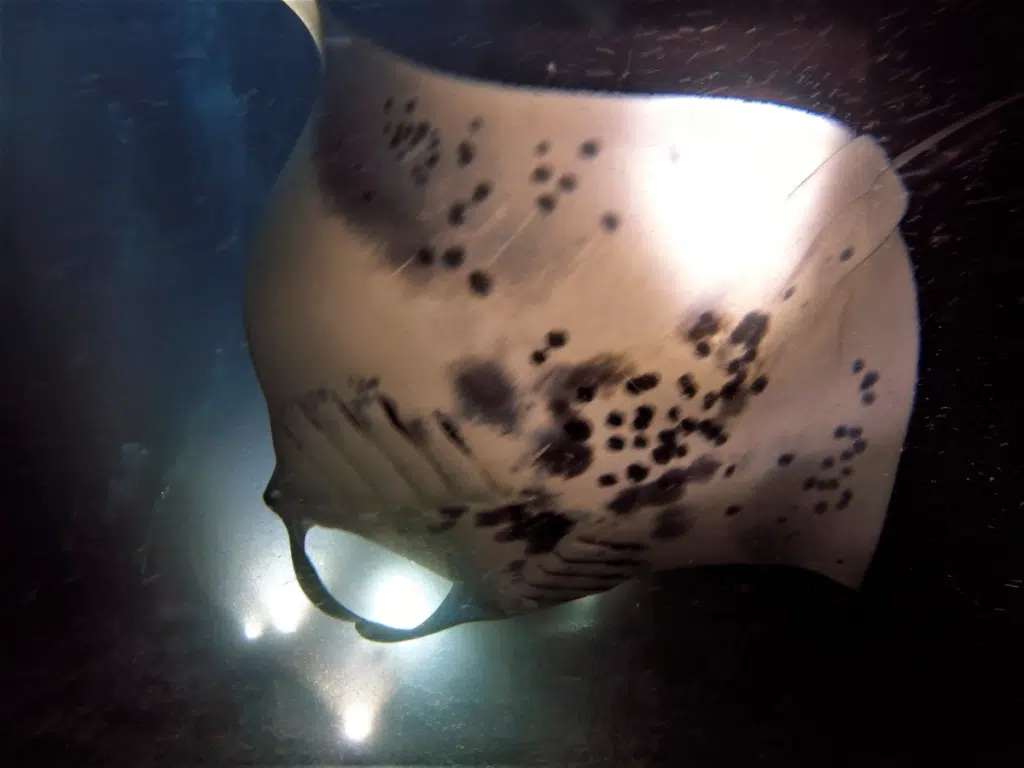
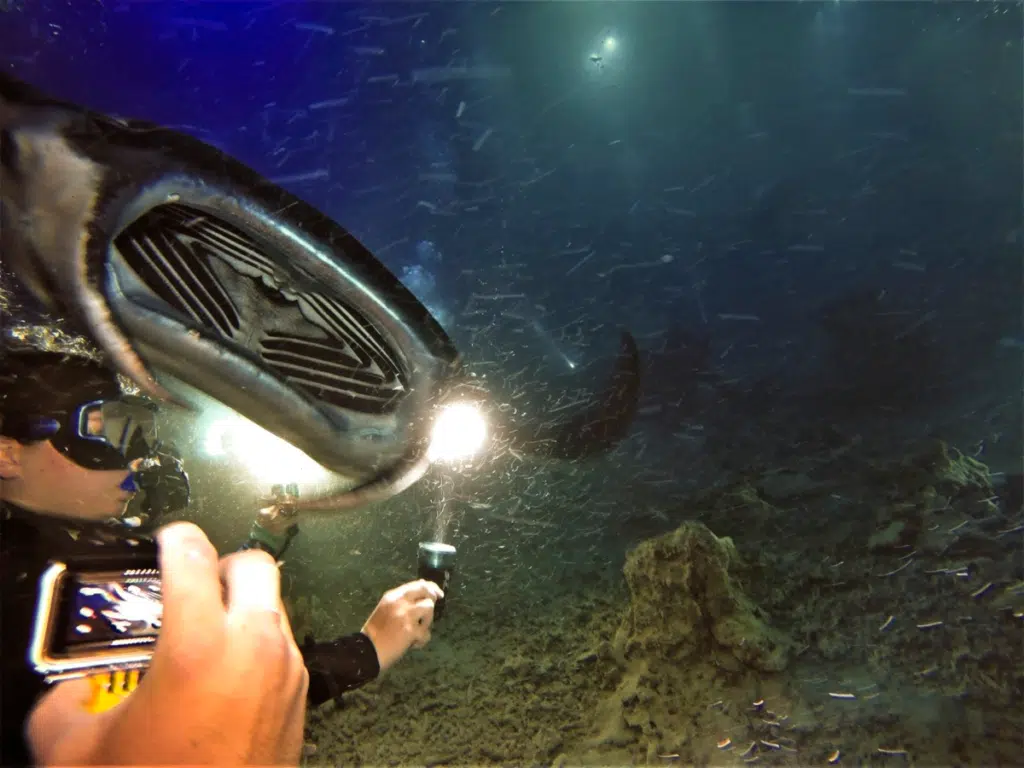
In the evening, book the famous Kona manta ray night dive snorkel if your older children are confident swimmers and comfortable in the ocean after dark. This is one of the most unique wildlife experiences in Hawaii. For certified divers, the Kona manta ray night dive is something truly spectacular.
The experience of floating alongside manta rays in their natural habitat is unforgettable. We’ve done the snorkel once and the scuba dive with mantas twice, and both are incredible in their own way. Our children were too young for this activity, but we’ll definitely try it if we visit the Big Island when they are old enough.
If the manta snorkel doesn’t fit your family, spend the evening exploring Kona town or Waikoloa and treat everyone to some epic shaved ice.
Day 6: Mauna Kea Beach and Sunset Stargazing
Start the day at Kaunaʻoa Beach (Mauna Kea Beach), beside the Mauna Kea Beach Hotel. The water here is usually calm and crystal clear with soft white sand that works beautifully for families.
This was one of our favourite spots for letting our little ones swim and play with minimal wave action or undertow to worry about. We saw sea turtles here and enjoyed some light snorkelling along the far rocky edge when the ocean was calm. Our little ones love snorkelling and want to try at every stop with calm enough waters!
Note: Parking is limited here as it is tied to the Mauna Kea Resort. You will want to arrive earlier in the afternoon if possible. If not, be prepared for public access restrictions depending on availability.
Later in the afternoon, drive up to the Mauna Kea Visitor Information Station for sunset. Watching the clouds sitting below you as the sun drops behind the horizon is something you won’t soon forget.
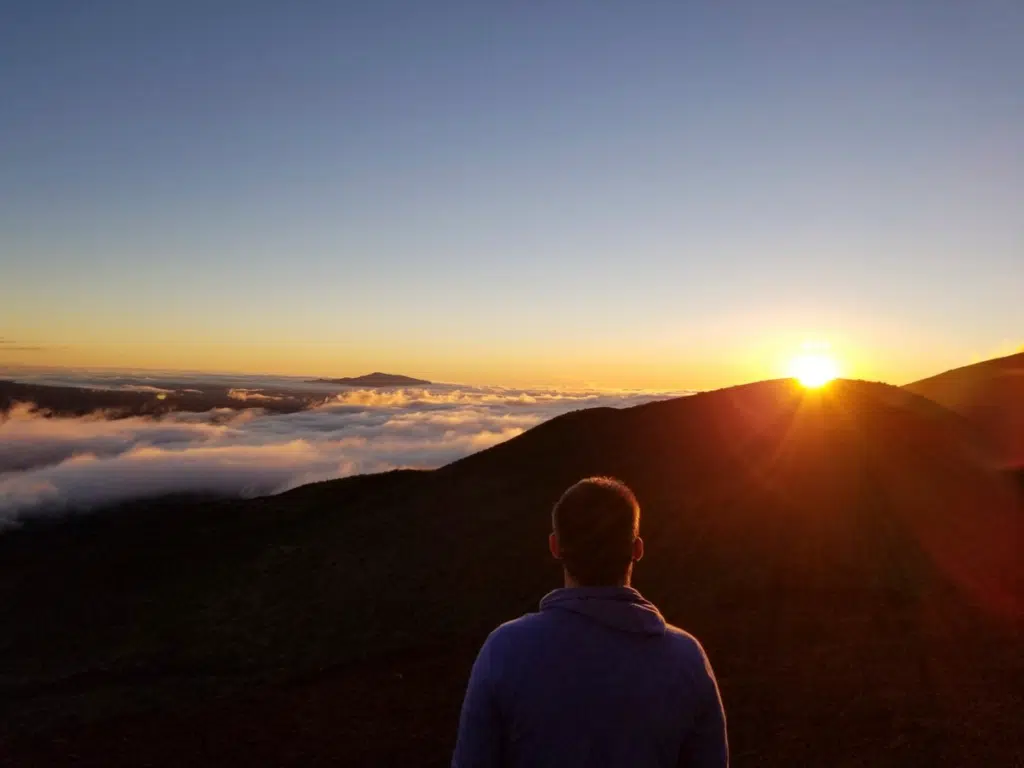
Once darkness settles in, the sky becomes incredibly clear and dark, revealing thousands of stars overhead and on a clear night even the Milky Way stretching across the sky. It’s quite something to witness!
Note: Temperatures are much colder at about 2,800 m (9,200 ft) elevation than at the beach so bring warm clothing. It’s not uncommon for it to under 10°C (50°F)
Day 7: Flexible Final Day & Departure
Use your final day however best suits your family. Our suggestions include:
- Another beach day along the Kohala Coast
- Snorkelling at Kahaluʻu Beach Park
- A day pass to one of the Waikoloa luxury resorts (we loved the facilities at the Hilton Waikoloa Village)
- A quiet day at your accommodation and pool before the final pack-up for the airport
This is also a good day to keep things flexible depending on energy levels, especially when travelling with kids after a busy week of exploring. For more ideas on how to structure your departure day, see our Departure Day Tips.
Departure Day Tips
Departure days in Hawaii can feel bittersweet, but a little planning makes them much smoother, especially with kids in tow.
If your flight departs in the morning or early-to-mid afternoon: Stay at your accommodation until checkout, then head to the airport with time to spare. If you have an hour or two before you need to leave, a final coffee at a local cafe or a quick browse of a nearby market is a lovely way to spend your last Hawaiian morning.
For flights that depart in the early evening: Ask your accommodation about a late checkout. Most vacation rentals and hotels will accommodate a later checkout for a small fee or sometimes at no charge if it’s not busy. This gives you time for one last beach visit or pool morning before cleaning up and heading to the airport.
If your flight departs late evening (between 9 and 11 PM is our usual departure time): We have two suggestions that work well for families.
- Arrange a late checkout from your accommodation. Then spend the day at a nearby beach, come back to shower and do final packing, grab an early dinner, and head to the airport relaxed and ready.
- Skip the late checkout entirely. Instead book a day pass at a resort within 45 minutes or so from the airport. This way you can spend the day enjoying the facilities in a little comfort, get showered and changed there, eat dinner, and head to the airport without the scramble.
On the Big Island, a day pass at the Hilton Waikoloa Village is a fantastic option and a brilliant way to end a Big Island trip in style.
Practical Tips to Plan Your Big Island Vacation
- Rent a car: essential, book early
- Use reef-safe sunscreen
- Respect the land and local customs
- Arrive at beaches around lunchtime for the best parking and space
For our full planning tips — including best time to visit, where to stay, and packing advice — see our Big Island Itinerary guide.


Is 7 Days Enough on the Big Island of Hawaii?
Seven days gives you a genuinely well-rounded Big Island experience. You’ll explore both coasts, spend proper time at Hawaii Volcanoes National Park, hit the best beaches, and still have a couple of slower days built in.
If you can swing more time, our 10 to 14-day Big Island itinerary adds North Kohala, Waipiʻo Valley, more waterfall stops, and a much more relaxed overall pace. If a week is what you have though, this itinerary makes the most of it. And if you’re working with less time, our 5-day Big Island itinerary covers the west side highlights in a focused and rewarding trip.
The Big Island has a way of getting under your skin. We hope it becomes a favourite for your family too.
If you found this 7-Day Big Island itinerary helpful, feel free to pin it on Pinterest, save it for later, and share it with anyone else dreaming of a trip to Hawaii.
You don’t have to live in Hawaii – or even be Hawaiian – to embrace the Aloha Spirit.
Mark Ellman